How to Sleep With a Snoring Partner: Practical Ways to Protect Your Sleep
If your partner snores, use practical steps to protect your sleep tonight, agree on a longer-term plan and recognise when a GP assessment matters.
The short answer
If your partner’s snoring keeps you awake, try comfortable earplugs, low-level background sound or an agreed separate sleeping space. Your partner could try sleeping on their side if comfortable. Talk about a longer-term solution during the day rather than in the middle of the night. If you notice breathing pauses, gasping or choking, or major daytime sleepiness, encourage a GP assessment. The NHS also recommends seeking help when snoring seriously affects either person’s life.
Start by solving tonight's sleep problem
This guide is general information for adults, not personal medical advice. It cannot identify the cause of someone’s snoring or replace assessment for concerning symptoms.
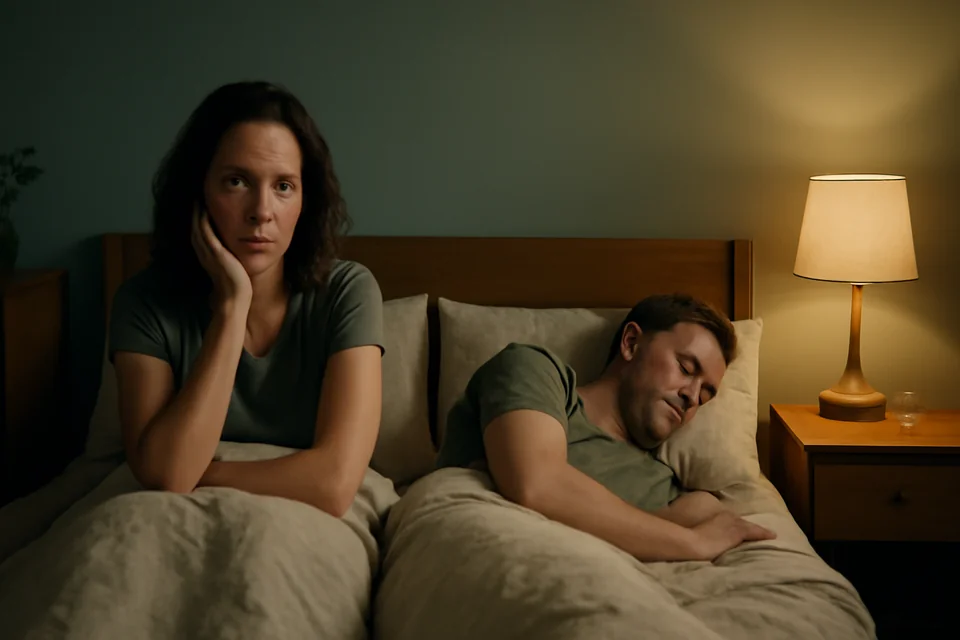
You are almost asleep when the noise starts. First comes a quiet rumble, then a louder snore. You shift your pillow, turn over and listen for the next one. Soon you are awake enough to worry about tomorrow.
The temptation is to solve everything at 2am: ask your partner to roll over, order an anti-snoring gadget or argue about who should sleep elsewhere. None of those decisions is easier when both people are tired.
Instead, separate the immediate disturbance from the bigger question. Tonight you need a reasonable chance to rest. Over the following days, you and your partner can work out whether the snoring responds to simple changes or needs medical assessment. Neither problem has to be solved by the person who is losing sleep alone.
Begin with the least disruptive option available. If comfortable earplugs help and you can still hear important alarms or calls for help, they may be enough. If they hurt, leave you feeling cut off from essential sounds or barely reduce the snoring, don't persist simply because they are inexpensive. A spare bed may be the better solution for a particular night. Choosing it does not mean you've given up on sharing a bedroom.
If either of you has already noticed unusual breathing pauses, gasping or choking, make a plan to speak to a GP rather than waiting for a bedroom experiment to work. You can protect your own sleep while that assessment is arranged.
Are earplugs worth trying?
The NHS snoring advice specifically suggests considering earplugs for someone whose partner snores. They do not need to make the room silent to be useful. The practical test is whether the sound becomes less disruptive without creating a new problem.
Comfort matters. Some people dislike pressure in the ear when they sleep on their side; others find that plugs move during the night or make their own breathing and swallowing sounds more noticeable. Choose something designed for its intended use and follow the manufacturer's fitting and hygiene advice. Do not force a plug into a painful ear or continue if irritation develops. A pharmacist or hearing professional can advise if you have an ear condition or uncertainty about suitability.
Before using any sound-blocking method overnight, think about what you must be able to hear. Smoke alarms, a child calling, someone who needs care or an important waking alarm may change what is practical. You may need an alternative alert system or a different sleeping arrangement. Don't use a method that makes you unsafe simply because it seems effective against snoring.
Earplugs are a way of managing noise, not treating its source. If your partner's snoring is getting louder, more persistent or associated with breathing concerns, hearing less of it is not a reason to postpone a GP conversation.
Would background sound help, or make the bedroom noisier?
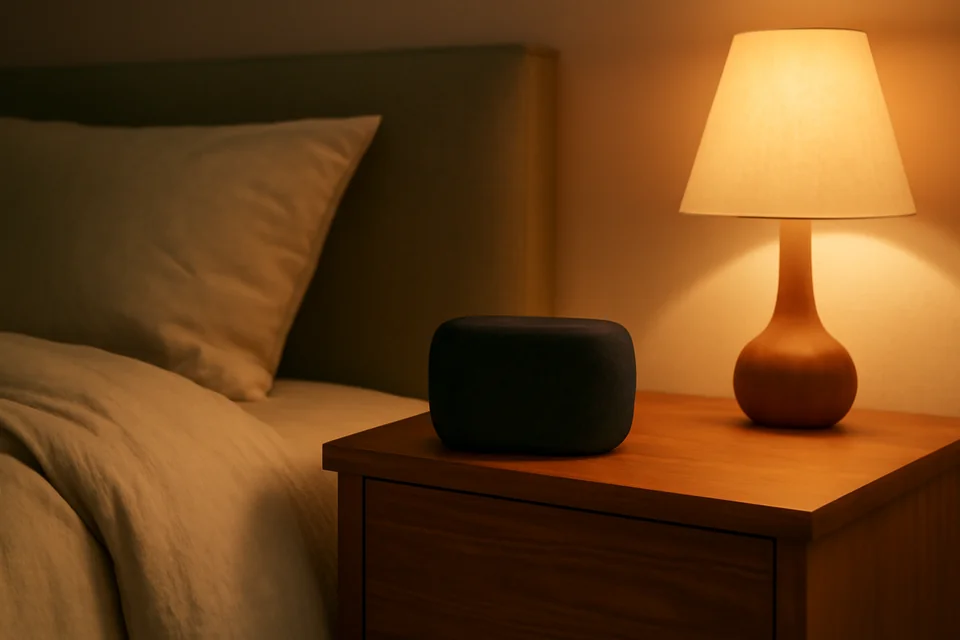
Some people find that a steady, low background sound makes unpredictable noise less noticeable. You might already have a fan or an unobtrusive source of rainfall or white noise. The NHS includes background sound among options for making a bedroom more comfortable for sleep, although it is not a guaranteed fix for snoring.
Try the smallest practical change. Keep the sound low, put the source safely away from the bed and make sure alarms and other essential signals remain audible. Ask your partner whether the extra sound disturbs them. Raising the volume until the snoring disappears can create another problem rather than solve the first one.
If silence works better for you, keep it. The evidence does not support treating white noise as an essential sleep therapy. Our guide to white noise looks more closely at what masking can and cannot do.
Ask whether a change of sleeping position helps the snorer
Snoring often changes with sleep position. The NHS suggests sleeping on the side as one self-help measure because sleeping on the back can make snoring more likely. This is a reasonable thing for your partner to try if it is comfortable and compatible with any medical advice they have received.
Have the conversation in daylight, not after the third interruption. You might say, “I noticed the snoring seemed worse when you were on your back. Would you be willing to try settling on your side tonight?” This is more useful than repeated elbows or instructions while they are half asleep.
They may be able to use familiar pillows to make the position more comfortable, without buying a special device straight away. If pain, limited mobility, pregnancy-related positioning advice or prescribed equipment makes a change unsuitable, don't force it.
Also be realistic. Side sleeping may make some snoring quieter but does not prove that sleep apnoea is absent, and it may not help everyone. If there are possible breathing symptoms, the appropriate next step is clinical assessment, even if the noise improves on a particular night.
Look at the likely contributors without turning it into a blame game
It is easy for snoring to become a personal accusation: one person feels accused of making a noise they cannot consciously control, while the other feels dismissed for being exhausted. Treat the problem as shared, even though the reasons for each person's disturbed sleep differ.
The NHS identifies several factors that can contribute to snoring, including alcohol, smoking, sleeping on the back, being overweight and narrowing or blockage in the nose. None applies to everyone, and this is not a checklist to use against your partner.
If nasal congestion is obvious, it may be worth asking a pharmacist or GP about its cause and suitable treatment. If your partner has a cold, hay fever or a blocked nose, our guide to sleeping with a blocked nose explains sensible comfort steps and when to seek advice. Don't assume that nasal strips, sprays or mouth devices are right for every cause of snoring.
Alcohol can make snoring more likely, and sleeping tablets can sometimes worsen it. Avoid adding sedating medicines to “sleep through” the noise or urging your partner to take them. Don't stop any prescribed medication without professional guidance either.
Where health habits are relevant, agree on one realistic step rather than a wholesale bedtime overhaul. The aim is to improve nights for both people, not to win an argument about who is responsible.

When separate beds or bedrooms are a practical choice
Sleeping in separate rooms is sometimes described as a “sleep divorce”. The phrase can make an ordinary arrangement sound like a relationship crisis. In reality, two people can value sleeping together while recognising that a noisy night before an early start is difficult for one or both of them.
If you have another suitable sleeping space, consider agreeing in advance how to use it. Perhaps you start the night together, and one person moves if the noise becomes disruptive. Perhaps you use separate rooms during a cold or while your partner is waiting for assessment. Or perhaps sleeping separately more regularly suits you both.
Avoid making the move feel like a punishment. Decide together who moves, what bedding will be available and how you will avoid switching lights on or waking the other person. The simplest plan is often the one that can be followed without another conversation in the middle of the night.
Separate sleeping is not a medical treatment for snoring or sleep apnoea. It can protect the listener's opportunity to sleep while the underlying problem is being addressed. If the snorer has concerning breathing symptoms, the fact that the room is now quiet for you does not mean those symptoms have gone away.
You don't need to choose a permanent arrangement after a single bad night. A reversible trial gives you information about how much the noise is affecting you without turning it into a judgment on the relationship.
How to talk about snoring without another bedtime argument
Choose a time when neither person is rushing or trying to fall asleep. Describe what happens to your sleep, rather than suggesting your partner is deliberately causing it.
“I was awake for a long time after the snoring started” is a more useful starting point than “You were impossible last night.” It leaves room for a practical reply: “What would help tonight?”
Aim to agree on three things. First, what will the listener do if the noise keeps them awake? Second, what small change is the snorer willing to try? Third, what would make it sensible to seek professional advice?
The last question matters. The NHS recommends seeing a GP if snoring has a big impact on the snorer's or partner's life, or if lifestyle changes are not helping. You don't need to wait until resentment builds or buy a series of expensive products first.
If one person doesn't believe the snoring happens, a partner can describe the pattern without staying awake to collect evidence. A recording made with consent might help explain the sound, but it cannot diagnose sleep apnoea or replace assessment.
When snoring needs more than a quieter bedroom
Ordinary snoring is common and often not caused by anything serious. But some night-time sounds warrant more attention. The NHS sleep apnoea guidance describes signs including breathing that stops and starts, gasping, snorting or choking, loud snoring and repeated waking. Significant tiredness or sleepiness during the day can also be relevant.
If you hear your partner stop breathing and then gasp, or they regularly wake choking, encourage them to book a GP appointment. Do the same if they are consistently very tired in the daytime, especially alongside night-time breathing concerns. A GP may arrange tests, often carried out at home. It is not possible to work out from the loudness of snoring alone whether someone has sleep apnoea.
Your observations can help, but you do not have to monitor their breathing all night. Tell them what you've noticed and offer to describe it to the GP if that would be useful. Our separate snoring versus sleep apnoea guide explains the symptoms, assessment and testing in more detail.
If either of you is struggling to stay awake during the day, take safety seriously. Do not drive when sleepy or continue a safety-critical task while fighting sleep. Arrange another way to travel and seek appropriate medical advice. A few hours of quiet sleep or a cup of coffee should not be treated as proof that alertness is safe.
Importantly, earplugs and background sound should not be used to dismiss a possible breathing problem. Protecting the listener's sleep and looking after the snorer's health are two different tasks, and both deserve attention.

A simple three-night plan to find out what helps
You do not need to collect complicated sleep scores, record every snore or change the room completely. Three ordinary nights can help you decide which comfort measure is worth keeping, provided there are no breathing warning signs that should prompt a GP conversation now.
Before the first night: Have a short daytime conversation. Agree on a safe backup sleeping place if one is available. Decide who will move if needed and what important sounds you must still hear. If there are breathing pauses, gasping, choking or marked daytime sleepiness, arrange medical advice; don't wait for the experiment.
Night one — reduce the disruption: Try the simplest suitable option for the listener, such as comfortable earplugs or an agreed alternate room. Do not combine several new gadgets. In the morning, ask whether the solution was comfortable and whether you felt less interrupted.
Night two — test one snoring-related change: If your partner is happy to do so, try settling on their side or consider whether an obvious temporary nasal blockage needs advice. Leave the listener's arrangement otherwise familiar. Don't compare the night by timing every snore; note whether it was manageable.
Night three — use what you learned: Keep the most useful, safe measure, or agree that you need separate sleep spaces for now. If the snoring remains a major problem, plan a GP conversation. If neither trial helped, there is no need to keep adding equipment just to complete a plan.
The next morning, write no more than three observations: what you tried, whether the listener's sleep was disturbed and whether either person experienced discomfort or safety concerns. Stop tracking if it makes bedtime feel like a test.
This is a household trial, not a diagnostic sleep study or a treatment programme. A few quieter nights cannot rule out sleep apnoea or explain every cause of tiredness.

Questions people often ask
Can I get used to my partner's snoring?
Some people find a familiar sound becomes less noticeable, but there is no reliable timetable for becoming accustomed to snoring. If it keeps waking you or affects your day, you do not have to wait for your brain to adapt. Try a safe practical change and discuss the snoring itself rather than assuming it is something you must tolerate indefinitely.
Is it better to fall asleep before the person who snores?
You could try settling first if your routines allow it, but this is not a proven solution. Snoring may still wake you later, and changing bedtime can be inconvenient. Keep your normal sleep opportunity in mind rather than staying up or going to bed unnaturally early to work around someone else's schedule.
Will a white-noise machine completely cover snoring?
Not necessarily. Snoring can vary in loudness and timing, and steady background sound does not remove it. Some people find masking helpful; others sleep worse with added noise. Try a low level only if it is comfortable and safe, rather than turning it up until everything else is inaudible.
Should I buy an anti-snoring pillow or mouthpiece?
Not as the first response to every case of snoring. Position changes may help some people, but products differ and the cause matters. If simple steps aren't helping or the snoring substantially affects either person's life, the NHS advises speaking to a GP. Devices worn in the mouth should be discussed with an appropriately qualified professional, especially if sleep apnoea is suspected.
What if my partner refuses to discuss it?
You can still protect your own sleep with safe, mutually workable room arrangements. Raise the subject at a calm time and focus on the real effect on your nights rather than winning an argument. You cannot diagnose or treat someone without their cooperation. If you have observed breathing pauses or choking, explain why those symptoms warrant professional advice, while recognising that the other person must take part in their care.
The practical next step
A snoring partner can turn bedtime into something you dread, but you do not need to solve the whole problem tonight. Protect your chance to rest with a safe, reversible change. Talk about the longer-term pattern when both of you are awake and calm. Treat breathing pauses, gasping, choking or significant daytime sleepiness as reasons to seek professional advice, not simply noises to block.
Start with what is actually disturbing your night, keep the approach manageable and remember that the goal is better sleep for both people — not a silent room at any cost.