
Does exercising before bed affect your sleep? How late is too late
The Short Answer
For most healthy adults, moderate exercise in the evening does not seem to harm sleep, and gentle activity is probably fine too, though it has been studied less. Hard or long workouts closer to bedtime are more likely to cause problems, and one large study linked them to later, shorter sleep. NHS insomnia advice is to avoid exercising in the four hours before bed, but that is a cautious guide rather than a proven cut-off. If a late session leaves you wired, move it earlier.
If you're like a lot of people, the evening is the only time exercise fits.
See a GP if
- Changing your sleeping habits has not helped, or you have had trouble sleeping for months.
- Poor sleep is making it hard to cope with daily life.
- You are very sleepy during the day, or someone has seen you stop breathing, gasp or choke in your sleep.
This guide is general information, not medical advice. It is about timing, not about whether a particular type of exercise suits you. The NHS advises speaking to your GP first if you have not exercised for some time or have a medical condition.
If you're like a lot of people, the evening is the only time exercise fits. Work, the school run and caring all get there first. Then comes the worry: will a workout at 7pm leave you staring at the ceiling at midnight?
You've probably been told it will. The research is less clear-cut. Most of it suggests that ordinary evening exercise is fine, with a more cautious message for hard, long sessions close to bedtime. This guide walks you through what is known, where the evidence is thin, and how to work out your own cut-off.
Why is exercising in the evening thought to harm sleep?
Sleep advice has long discouraged exercise late in the day. The usual reasoning is sensible enough: exercise raises your heart rate and leaves you feeling alert, so sleep might come later.
Researchers do not fully agree on why late exercise might affect sleep, or how much it matters for most people. A 2024 trial team wrote that the mechanisms remain unclear. That is worth remembering whenever you see a confident explanation online.
It also helps to keep the bigger picture in view. The NHS says regular physical activity can help you sleep better, and that even small amounts make a difference. The question is not whether to be active. It is when, and how hard.
What does the NHS recommend about exercising before bed?
Two NHS pages give slightly different messages.
The NHS insomnia page lists self-help advice for people with insomnia. It suggests exercising regularly during the day, and not exercising in the four hours before bed. It was last reviewed in March 2024.
The NHS Every Mind Matters page on sleeping better is softer. It says some people find that exercising close to bedtime affects their sleep, and that if this happens to you, you could try being active earlier in the day.
The four-hour advice is a precaution for people who are already struggling to sleep. The NHS page does not set out the research behind that exact number, so think of it as a sensible starting point rather than a line that suddenly changes your night.
What does the research say about evening exercise and sleep?
What controlled studies found about single evening workouts
A 2019 review and meta-analysis pooled 23 studies in healthy adults. In each, people did one evening exercise session on one night and no exercise on another, and their sleep was compared.
Overall, it did not support the idea that evening exercise harms sleep. If anything, people spent slightly more time in deep (slow-wave) sleep. The authors did flag one exception: falling asleep, total sleep time and sleep efficiency (the share of time in bed spent asleep) might be worse after vigorous exercise that ended within an hour of bedtime. They also found that some patterns disappeared when a single study was removed, so those findings were not robust.
A 2022 analysis compared low, moderate and high-intensity evening exercise across 28 studies and 325 people. It found no significant differences in how long people took to fall asleep, how long they slept, or how much they woke in the night. The one clear change was a small drop in REM (dreaming) sleep after high-intensity exercise, of about two percentage points. What that means for how rested you feel is unclear.
These studies have limits. The people tested were mostly young, fit men with no sleep problems, and the studies were small. The exercise was cycling or running, so we know much less about other activities.
What a large study found about late workouts and sleep
A 2025 study in Nature Communications took a different approach. It analysed wearable data from almost 15,000 physically active people, covering about four million nights.
It found that later exercise and harder exercise were associated with later sleep onset, shorter sleep and lower sleep quality. The pattern depended on both how hard the session was and how close to bedtime it ended. Exercise that finished at least four hours before sleep was not associated with any changes, however hard it was.
One comparison stands out. Compared with light exercise at the same time, maximal-effort sessions ending about two hours before usual sleep were linked with sleep starting about 36 minutes later and about 22 minutes less sleep. Exercise after people's usual bedtime was linked with the biggest disruption.
This was observational, so it shows associations, not cause and effect. People choose when and how hard to train, and those who do hard late sessions may differ in other ways. The wearable estimated sleep rather than measuring it clinically, and it could not tell when people actually tried to sleep. About three-quarters of participants were men, and all were already active. Two of the authors work for the wearable company, which the paper discloses.
What a small trial found about short bursts of activity
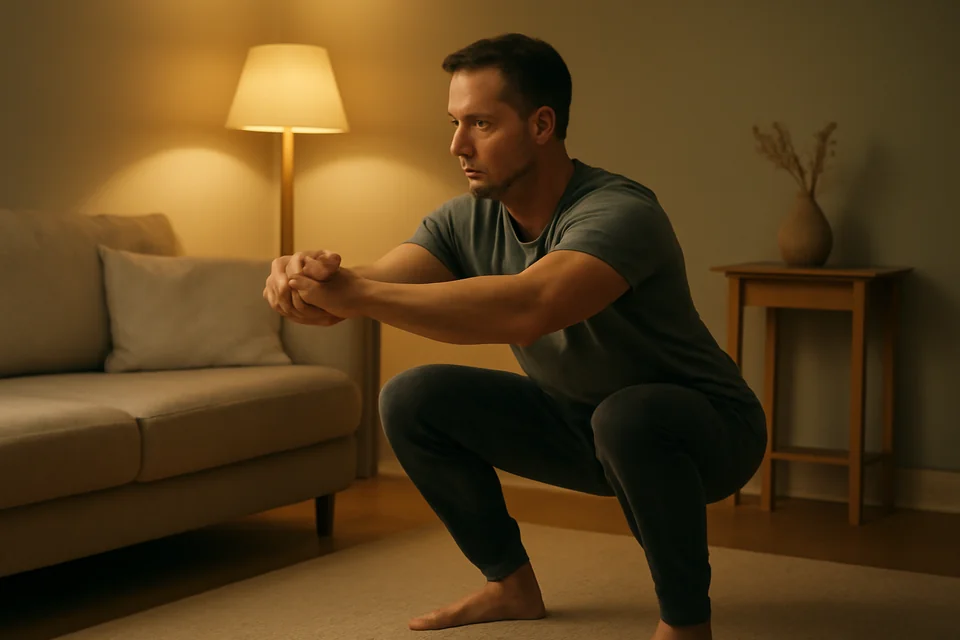
A 2024 randomised trial tested something different. Twenty-eight mostly young adults each took part in two four-hour evening sessions, starting at about 5pm. In one they stayed seated throughout. In the other they did three minutes of simple bodyweight exercises (chair squats, calf raises and knee raises) every half hour.
On the night after the exercise breaks, people slept about half an hour longer, though the range of uncertainty was wide. Sleep quality did not change. But part of the extra sleep came from waking later, and there was no difference over the following two nights. It was also a laboratory study in a small group, comparing breaks with sitting, not with a workout.
Does exercising late actually cause poorer sleep?
Randomised trials, including crossover trials where each person acts as their own comparison, are better placed than observational studies to show cause and effect. They are not proof, though. Small samples, laboratory conditions and short follow-up limit what they can tell us, and the results may not apply to everyone. Large wearable studies can show patterns in real life, but not why they occur. Neither can tell you exactly what will happen on your next evening run.
Gentle, moderate or vigorous: does intensity matter?
Yes, it seems to matter more than the clock alone. The NHS describes intensity by how it feels, which is a handy guide.
| Gentle | Moderate | Vigorous or very vigorous | |
|---|---|---|---|
| How it feels | Easy, comfortable conversation | Warmer and breathing faster; you can talk but not sing | Breathing hard and fast; only a few words without pausing |
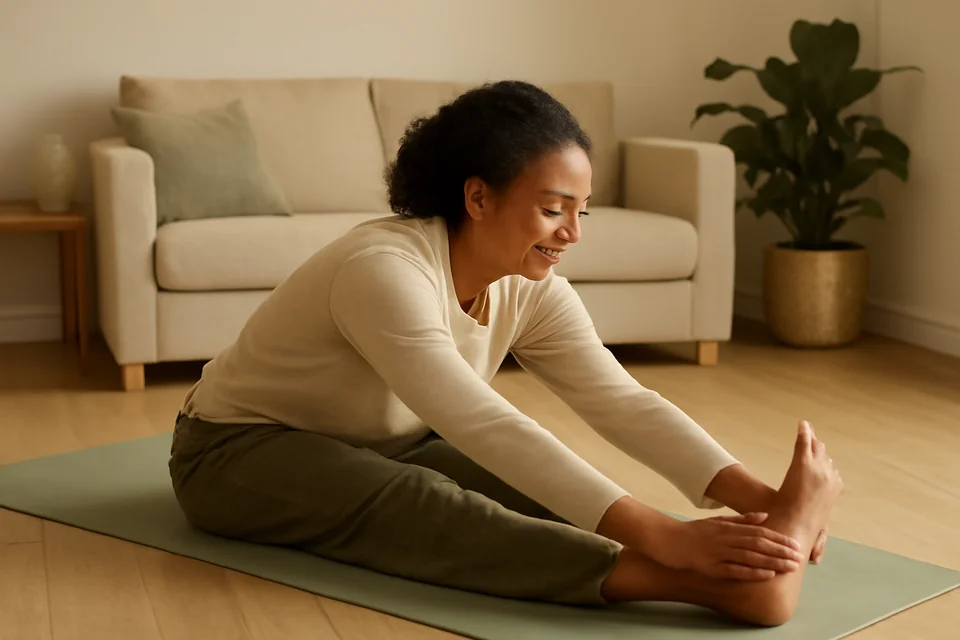
| Examples | A stroll, light stretching | Brisk walking, steady cycling, dancing | Running, fast cycling, football, interval training, heavy weights, spinning classes |
| What the research suggests | Little direct research; no clear evidence of harm, but few studies | No clear harm in controlled studies | Where concern is concentrated, especially close to bedtime |
The moderate and vigorous descriptions come from the NHS physical activity guidelines. The gentle category is our own plain-English addition. Researchers usually measure intensity by heart rate, so treat the table as a rough guide.
Very gentle activities such as stretching or an evening stroll have been studied far less than cycling and running. We have not found evidence that they cause problems, but with so little direct research we cannot say they never do.
So how late is too late to exercise?
There's no single answer, but the evidence points to a rough pattern for healthy adults, on average:
- Vigorous exercise ending within an hour of bed is where controlled studies suggest sleep might be affected.
- Hard sessions ending around two hours before bed were linked to later and shorter sleep in the large observational study.
- Exercise ending four or more hours before sleep was not linked with changes, however hard it was.
- Moderate exercise showed no clear problem in controlled studies, and gentle activity has been little studied.
These are averages. Some people fall asleep easily after a late run, and others feel wired after a brisk walk. Researchers have also barely studied whether body-clock type, such as being a morning lark or a night owl, changes the picture.
The NHS four-hour advice fits with the large 2025 study, but the controlled trials found problems mainly in the last hour. A fair reading is that four hours is a cautious rule for hard sessions and for people with sleep problems. It is not a threshold that makes sleep worse at three hours fifty minutes.
What if you can only exercise in the evening?
You don't have to give up evening exercise. A few adjustments are worth trying:
- Keep it lighter or shorter the closer you get to bed. Save the hardest sessions for earlier in the evening.
- Finish as early as you can. Exercise after your usual bedtime was linked with the biggest disruption in the large study.
- Check your caffeine. Some pre-workout drinks and supplements contain it. Researchers in the large study raised caffeine, evening meals, alcohol and bright gym lighting as possible contributors, though they could not test them. Our guide to how long before bed to stop caffeine explains how to find your own cut-off.
- Try short activity breaks. The NHS suggests breaking up long periods of sitting with some activity. A few minutes of gentle movement is a low-risk way to do it, though the trial above was too small to prove it helps sleep.
- Keep your wake-up time steady. The NHS advises getting up at the same time every day, and a late workout is not a reason to sleep in.
Does this apply if you already have trouble sleeping?
Most of the research above involved healthy people without sleep problems, and the 2022 analysis included only good sleepers. So we can't assume the same results apply to you if you already have insomnia.
If sleep is already difficult, the NHS four-hour advice is a sensible place to start. Try exercising earlier in the day and keeping evening activity gentle while you see what helps.
Exercise is good for you, but it should not replace evidence-based treatment for persistent insomnia. If you have had trouble sleeping for months, ask your GP about cognitive behavioural therapy for insomnia (CBT-I), a structured treatment designed for insomnia of this kind. Our guide to when you can't fall asleep covers what to do on the nights when sleep will not come.
Try a one-week test to find your own cut-off
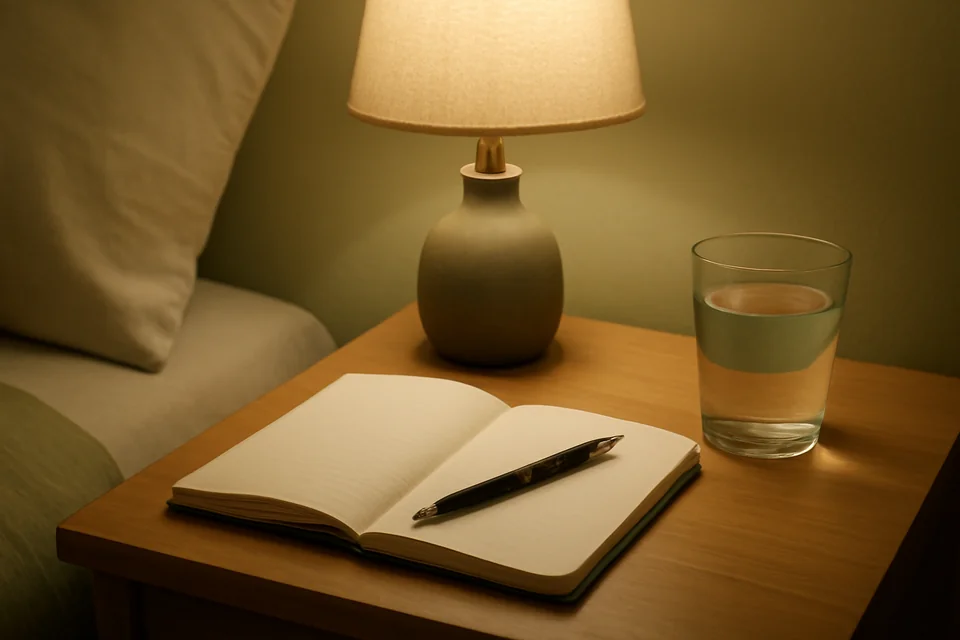
Your own response matters more than any average. A simple test is to change one thing for a week:
- For a few evenings, note when you finished exercising, how hard it felt, and how long you took to settle.
- Move the session earlier, or make it gentler, for the next few evenings.
- Compare how you felt and slept.
The free sleep diary makes this easy, and the seven-night wind-down shows how to test one change without turning it into a project.
A week of informal notes can't prove anything, because other things change too. If tracking makes you more anxious about sleep, stop and go by how you feel.
When to get more help if your sleep is still poor
If the signs listed under "See a GP if" near the top apply to you, book an appointment rather than adjusting your exercise further. It helps to bring notes from your sleep diary and say when you usually exercise.
Our guide to snoring and sleep apnoea explains the warning signs and what to tell your GP. Do not drive if you feel sleepy.
The takeaway: hard late sessions are the ones to watch
For most healthy adults, a moderate evening workout is unlikely to wreck your sleep, and gentle activity is probably fine too, although it has been studied less. Hard or long sessions close to bedtime are the ones to watch, and the evidence suggests leaving a few hours before bed if you can. That is cautious guidance, not a proven rule.
If a late workout leaves you wired, move it earlier or turn it down a notch. Exercise that fits into your life is better for you than exercise you skip.
Sources & References
- NHS: Insomnia
- NHS Every Mind Matters: How to fall asleep faster and sleep better
- NHS: Physical activity guidelines for adults aged 19 to 64
- Stutz J, Eiholzer R, Spengler CM. Effects of evening exercise on sleep in healthy participants: a systematic review and meta-analysis. Sports Medicine. 2019
- Yue T, Liu X, Gao Q, Wang Y. Different intensities of evening exercise on sleep in healthy adults: a systematic review and network meta-analysis. Nature and Science of Sleep. 2022
- Leota J, et al. Dose-response relationship between evening exercise and sleep. Nature Communications. 2025
- Gale JT, et al. Evening regular activity breaks extend subsequent free-living sleep time in healthy adults: a randomised crossover trial. BMJ Open Sport & Exercise Medicine. 2024