
Sleep problems / Field guide
How Can You Sleep When Tinnitus Is More Noticeable at Night?
Why tinnitus can seem louder at bedtime, what may make nights easier, and when persistent sleep problems deserve more support.
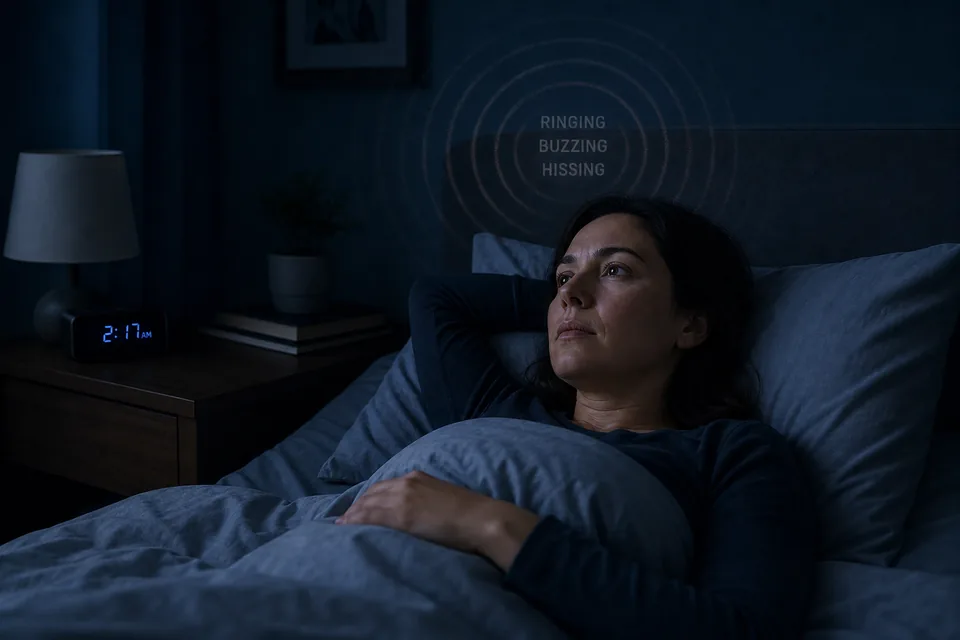
The short answer
Tinnitus can seem louder at bedtime because the quiet bedroom gives your brain fewer other sounds to notice. Gentle background sound may make the contrast less obvious, while a consistent sleep routine and avoiding a nightly battle with the noise can also help. If tinnitus is regularly stopping you sleeping, there are treatments worth discussing with a healthcare professional.
You've made it through the day without thinking too much about the noise in your ears.
Then you get into bed.
The television is off. The house is quiet. There's no traffic outside, no conversation, no kettle boiling, no everyday background noise competing for your attention.
And suddenly the ringing, buzzing or humming seems to have moved centre stage.
If you've experienced this, you may have wondered whether your tinnitus actually gets worse at night.
Often, the answer is more reassuring than that. The tinnitus may not have become louder at all. It may simply be much easier to notice when everything around you becomes quiet.
Unfortunately, knowing that doesn't necessarily make it easier to fall asleep.
So what can you actually do?
Why does tinnitus suddenly seem louder when you get into bed?
One of the strangest things about tinnitus is how much your surroundings can change your experience of it.
During the day, your brain has plenty to deal with.
People are talking. Cars are passing. You're walking around, working, watching television, making dinner or thinking about what needs doing next.
Tinnitus is still there, but it has competition.
Then bedtime arrives and much of that competition disappears.
Tinnitus UK notes that the move from the relatively noisy environment of daytime to a quiet bedroom can make tinnitus more noticeable.
That's an important distinction.
More noticeable doesn't necessarily mean louder.
And it certainly doesn't mean that every difficult night is evidence your tinnitus is getting worse.
Sometimes you've simply created the perfect environment for noticing a sound that's been there all along.
Complete silence isn't necessarily your friend
If silence makes your tinnitus leap to the front of your attention, you don't have to prove that you can sleep through it.
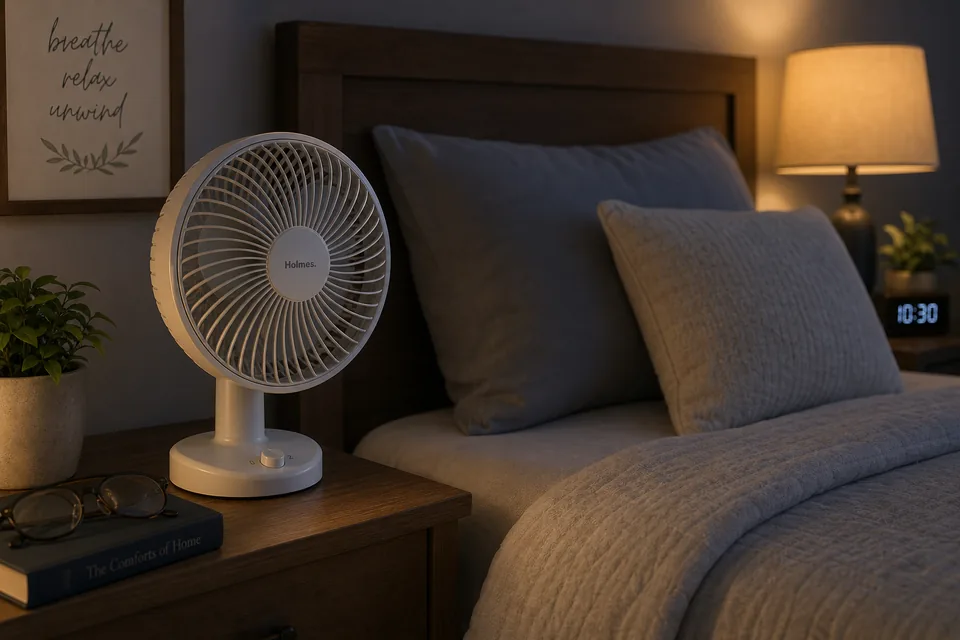
A little background sound may make bedtime feel less stark.
That doesn't necessarily mean trying to completely drown out the tinnitus.
You might prefer the gentle sound of:
- a fan
- rainfall
- waves
- quiet natural sounds
- low-level radio or another unobtrusive background sound
Tinnitus UK suggests experimenting with background sound and finding something that works for you.
The important word there is experimenting.
There isn't one magical sound that works for everybody.
You might love rainfall while someone else finds it irritating. You might find a fan pleasantly neutral while another person becomes fixated on the rhythm.
Keep the volume comfortable and give yourself permission to try different options.
Our guide to white noise for sleep looks more closely at using background sound at night.
But doesn't sound therapy treat tinnitus?
This is where I'd be careful about making promises.
Using some gentle background sound because it makes a quiet bedroom more comfortable is one thing. Claiming that a particular sound will treat or cure your tinnitus is another.
NICE reviewed sound therapy for tinnitus but found the evidence insufficient to recommend a particular form of sound therapy as a standalone treatment.
So think of bedtime sound in a practical way.
If it helps reduce the contrast between your tinnitus and a silent room, that's useful.
It doesn't need to be a cure to make bedtime easier.
The harder you listen for tinnitus, the harder it can be to ignore
Here's where nights can become frustrating.
You notice the tinnitus.
Then you check it.
Is it louder tonight?
You listen again.
Yes, I think it is.
Now you're wondering whether you'll sleep.
You check the time.
You calculate how many hours are left before morning.
And before long, you're not simply lying in a quiet bedroom with tinnitus. You're lying there monitoring tinnitus while worrying about sleep.
That's a very different experience.
Attention matters.
Think about the ticking of a clock. You can sit in a room for half an hour without consciously hearing it, then somebody mentions the ticking and suddenly it's difficult to hear anything else.
The clock didn't become louder.
Your attention changed.
I'm not suggesting tinnitus is simply a matter of “not thinking about it”. It isn't.
But repeatedly checking whether the sound has changed can give it even more of your attention at exactly the time you're trying to disengage from the day.
If you catch yourself monitoring the sound, you don't need to fight with yourself either.
Just notice what you're doing and gently redirect your attention elsewhere.
Try not to make falling asleep tonight's test
There can be a point where bedtime starts to feel like an exam.
Will I sleep tonight?
Will the tinnitus keep me awake?
What if tomorrow is awful?
That pressure can make an already difficult situation harder.
Sleep isn't something you can force through determination.
In fact, trying harder to sleep often leaves you more alert.
If you've been lying awake for a while and you can feel yourself becoming frustrated, it can be better to get out of bed for a little while and do something quiet and relaxing.
Then return when you're feeling sleepy again.
This is also a useful principle if tinnitus isn't the only reason you're awake.
Our guide to what to do when you can't fall asleep explains this in more detail.
What if you wake at 3am and immediately hear the ringing?
Falling asleep isn't always the problem.
You might get to sleep perfectly well, wake briefly during the night and immediately notice your tinnitus.
Then your brain starts up.
There it is.
How long have I been awake?
Am I going to get back to sleep?
The temptation is to start troubleshooting at 3am.
Try not to.
A brief awakening during the night doesn't mean the rest of the night is lost.
Keep things as uneventful as possible. Avoid repeatedly checking the clock or testing whether your tinnitus has changed.
If you're comfortable and sleepy, give yourself a chance to drift back off.
If you're becoming increasingly awake and frustrated, getting up briefly and returning to bed when you're sleepy may be more useful than spending a long time fighting with the pillow.
We have a separate guide to waking up at night if this is becoming a regular pattern.

Give your bedroom something else to offer your attention
If tinnitus becomes most noticeable when your environment becomes quiet, it's worth looking at the bedroom itself.
Not because you need to transform it into a sleep laboratory.
You don't.
But small things can make bedtime easier.
Perhaps that's the gentle background sound we talked about earlier.
It might also mean keeping the room comfortably cool, reducing disruptive outside noise and making sure your bedroom feels like somewhere to wind down rather than somewhere you go to battle with sleep.
Our bedroom environment guide covers the basics.
There's also a balance here.
You don't want to create a 14-step bedtime ritual that leaves you convinced you can only sleep if every condition is perfect.
The aim is simply to make the room reasonably comfortable and give your brain fewer reasons to stay alert.

Watch what happens in the hour before bed
Sometimes tinnitus gets blamed for every bad night when something else is adding fuel to the fire.
Perhaps you've been scrolling on your phone until the moment you turn the light off.
Maybe you've spent the evening working.
Or you've been worrying about tomorrow and carrying the conversation into bed inside your head.
Tinnitus may be the thing you notice once the room goes quiet, but it isn't necessarily the only thing keeping your nervous system alert.
A calmer transition into the night can help.
That doesn't require scented candles, herbal tea and a complicated routine unless you happen to enjoy those things.
It might simply mean giving yourself a little separation between the active part of your evening and trying to sleep.
And if your thoughts tend to become louder at exactly the same time as your tinnitus, our guide to racing thoughts at night may be useful.

What if background noise stops working?
Don't panic.
Something that helped for a while may become less useful, or you may simply have a few difficult nights.
Try not to respond by continually turning the volume higher or collecting more and more sleep sounds.
Ask yourself what the sound is actually doing for you.
Is it making the room feel less silent?
Is it giving your attention somewhere neutral to rest?
Or have you started thinking:
I absolutely cannot sleep without this exact sound?
That's worth noticing.
A useful sleep aid should make things easier, not become another thing to worry about.
You can change the sound, reduce it, try something simpler or occasionally sleep without it if that feels comfortable.
There's no prize for finding the perfect tinnitus soundtrack.
Could worrying about tinnitus be keeping you awake too?
This deserves more attention than it sometimes gets.
Tinnitus can be genuinely distressing.
If you find yourself worrying about what the sound means, whether it's getting worse or whether you'll ever sleep normally again, that emotional reaction can become tangled up with the sleep problem.
NICE specifically recommends asking people with tinnitus whether it is affecting their sleep and considering further assessment when it is. NICE also recommends psychological approaches, including tinnitus-related cognitive behavioural therapy, for adults whose tinnitus continues to cause significant distress.
That doesn't mean someone is telling you the tinnitus is “all in your head”.
It means the way tinnitus, attention, worry and behaviour interact can be worked with.
And sleep itself can be treated too.
If tinnitus has turned into insomnia, treat the insomnia
This is an important distinction.
Perhaps tinnitus started the problem.
But after weeks or months, you may find yourself struggling to sleep even on nights when the tinnitus isn't particularly intrusive.
Bedtime itself has become difficult.
You expect to be awake. You spend longer in bed trying to compensate. You worry about tomorrow. You start changing your days because of your nights.
At that point, treating the sleep problem directly can make sense.
Research into cognitive behavioural therapy for insomnia, or CBT-I, in people with tinnitus-related insomnia is encouraging.
A systematic review of randomised trials found CBT-based interventions improved insomnia in adults with tinnitus.
A later randomised controlled trial involving 102 people with tinnitus-related insomnia also found CBT-I reduced insomnia and improved sleep efficiency, with benefits still seen at six months.
If your problem has moved beyond the occasional difficult night, have a look at our guide to CBT-I.
You don't have to solve the tinnitus completely before you're allowed to work on your sleep.
When tinnitus deserves more than another sleep tip
Most of this article has deliberately focused on sleeping with tinnitus rather than diagnosing tinnitus.
But there are times when the right next step isn't another bedtime adjustment.
NICE recommends audiological assessment for people with tinnitus. It also identifies circumstances where further assessment or referral may be appropriate, including persistent pulsatile tinnitus and persistent tinnitus affecting one side.
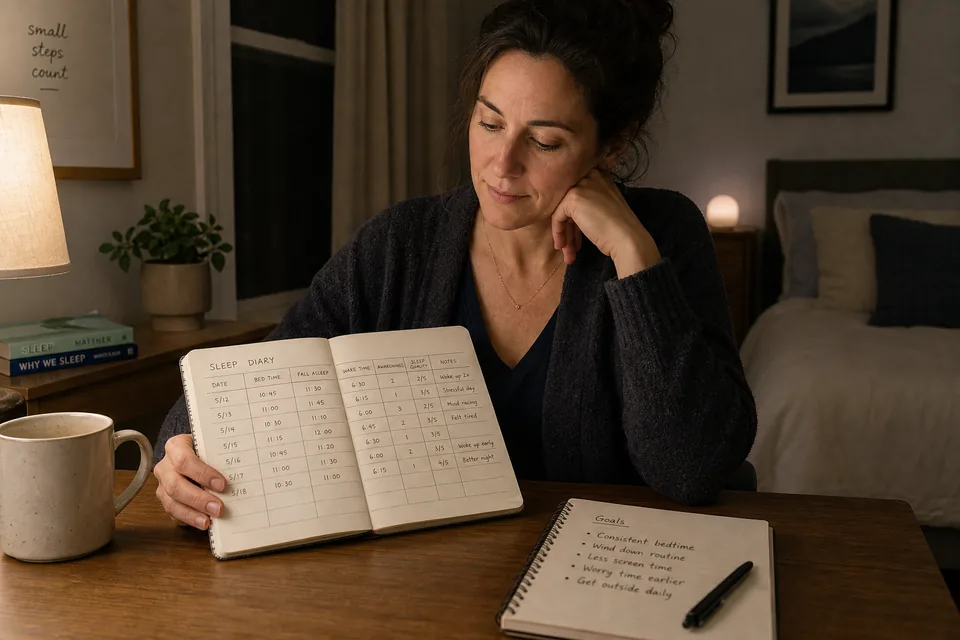
If your tinnitus is new, persistent, changing, troubling you significantly or affecting your sleep and daily life, speak to your GP or an appropriate hearing professional.
And if you're already receiving care for tinnitus but sleep has become a major problem, mention the sleep problem specifically.
Don't assume it's too trivial to bring up.
NICE guidance explicitly recognises sleep as an important part of assessing tinnitus.
Tonight, make the goal smaller
If tinnitus has been ruining your evenings, it's tempting to make tonight's goal:
I need to stop hearing it and get eight hours of perfect sleep.
That's an enormous amount of pressure to put on one night.
Try something smaller.
Make the bedroom comfortable.
Use gentle background sound if silence makes the tinnitus harder to ignore.
Don't keep checking whether the ringing is louder.
Give yourself a little time to wind down.
And if sleep doesn't arrive immediately, don't turn the night into a fight.
You don't need to make your tinnitus disappear before you can sleep.
Sometimes the first useful change is simply making it less important at bedtime.
Put this guide in context
Choose a next step that matches the problem you actually have. White noise: an optional tool for a noisy room offers a closer look at a connected question. If you are unsure where to begin, use the Start Here selector instead of trying several changes at once.
These suggestions are written for adults and need adapting to your health, responsibilities and living arrangements. A short morning note can help you describe a pattern, but keeping records is optional. You do not need to collect perfect evidence before asking for help. If an experiment makes you more uncomfortable or preoccupied, stop and choose a simpler response.
This is general information, not medical advice. Seek individual guidance for symptoms, treatment decisions or medicine questions. Persistent problems and safety concerns deserve attention even if some parts of an evening routine feel helpful.
Sources & references
Clinical context and further reading. Our practical examples are editorial suggestions, not individual treatment protocols.
- NICE: Tinnitus assessment and management
- NICE: Tinnitus assessment and management - Rationale and impact
- Tinnitus UK: Tinnitus and sleep disturbance
- Tinnitus UK: Tips for a good night's sleep
- PubMed: CBT-based interventions for insomnia in adults with tinnitus
- PubMed: CBT-I for tinnitus-related insomnia
Source check: 5 September 2026. Evidence label: Practical guidance. Read how we use evidence.