
Sleep problems
How to Sleep After a Night Shift: A Practical Guide for Shift Workers
Getting home after a night shift can feel strange. This guide helps you find a realistic sleep routine, manage daytime light and noise, and get home safely.
Checked against NHS and other linked sources on 3 October 2026. Not reviewed by a doctor. How guides are made
The short answer
Most people sleep better after a night shift when they plan their sleep time, make the bedroom dark and quiet, and avoid caffeine too close to the end of the shift. Some people sleep soon after getting home, while others do better with a different or split schedule. There isn't one routine that suits every shift worker. Look for a repeatable pattern that gives you enough sleep and leaves you reasonably alert when awake. If you're too sleepy to drive home safely after a night shift, don't drive. Getting home safely comes before optimising your sleep routine.
This guide is general information, not medical advice. If you are worried about your symptoms, speak to a GP or pharmacist.

Getting home after a night shift can feel strange. You've been fighting sleep for hours, yet once you're finally in bed, you may find yourself wide awake.
Or perhaps you fall asleep easily but wake three or four hours later and cannot get back to sleep.
Neither necessarily means there's something wrong with your sleep. Night work asks your body to sleep at a time when daylight, daytime noise and your internal body clock are encouraging wakefulness.
The aim isn't to create a perfect daytime version of night-time sleep. It's to give yourself the best realistic opportunity to recover between shifts.
Why can sleeping after a night shift be so difficult?
There are two main problems working against you.
The first is obvious: the world is awake.
There may be daylight coming through the curtains, traffic outside, deliveries, neighbours, children, phones and all the ordinary noise of daytime life.
The second problem is happening inside you.
Your circadian rhythm, often called your body clock, helps organise periods of sleepiness and alertness across roughly 24 hours. Light is one of the strongest signals influencing this system.
After working through the night, you're trying to sleep when your body would normally be preparing for daytime activity.
That helps explain the frustrating experience of feeling exhausted at work and then becoming more alert on the journey home.
Daytime sleep also tends to be shorter and more easily disturbed than normal night-time sleep, something recognised in UK Health and Safety Executive guidance for shift workers.
If you want a deeper explanation of sleep timing, our guide to resetting your body clock explains how light and sleep timing interact.
Should I go straight to bed after a night shift?
For many people, going to bed fairly soon after arriving home works well. You're already tired, and it gives you a longer opportunity to sleep before the next shift.
But another schedule may suit you better.
The Health and Safety Executive suggests that regular shift workers may need to experiment with sleeping soon after returning home or sleeping later before the next shift. Once you've found a pattern that works reasonably well, keeping it fairly consistent can help.
Pay attention to what actually happens.
If going straight to bed repeatedly results in only a few hours of sleep, try adjusting the timing.
If delaying sleep leaves you exhausted and struggling to function, sleeping sooner may make more sense.
Give a routine several shifts before judging it rather than changing everything after one difficult day.
How long should I sleep after a night shift?
There isn't a special number of hours that applies only to night workers.
Your need for sleep doesn't disappear because your working hours have changed. What changes is how difficult it can be to obtain enough sleep within a 24-hour period.
That distinction matters.
If daytime sleep is repeatedly cut short, simply deciding that four or five hours is "normal for night shifts" doesn't necessarily mean it's enough for you.
Look at the bigger picture:
- How much sleep are you getting across 24 hours?
- Are you regularly struggling to stay awake?
- Do you feel dangerously sleepy while driving?
- Are you relying on increasing amounts of caffeine just to function?
- Do you sleep much longer whenever you finally get the opportunity?
Your pattern over several days tells you more than one isolated daytime sleep.
For more about individual sleep requirements, see our guide to how much sleep adults need.
Make daytime feel more like sleep time
You don't need to turn your bedroom into a sealed bunker.
But daytime sleepers face some problems that night-time sleepers don't.
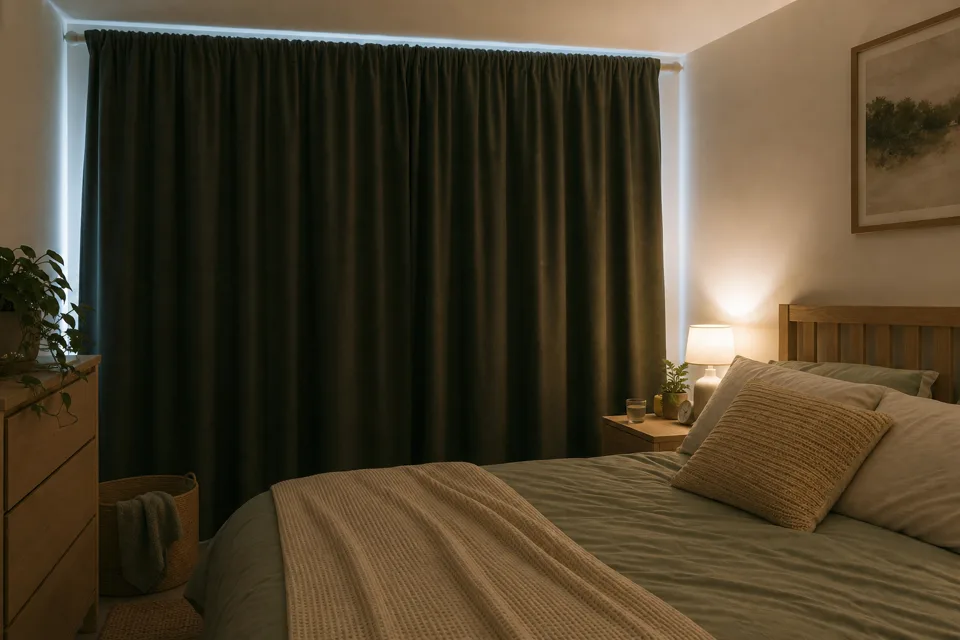
Make the room dark
Blackout curtains or blinds can make a practical difference. An eye mask is another simple option if light still gets through.
Darkness doesn't guarantee sleep, but it removes one strong signal telling your body that it's daytime.
Reduce avoidable noise
Close windows if outside noise is a problem, silence notifications and let other people in the house know when you're sleeping.
Earplugs may help. Background or white noise can also be useful when it masks unpredictable sounds rather than becoming another disturbance.
Our bedroom environment guide covers light, noise and temperature in more detail. We also have a separate guide to using white noise for sleep.
Keep the temperature comfortable
A hot, stuffy room can make daytime sleep more difficult.
You don't need to chase an exact "perfect sleeping temperature". Aim for a room and bedding combination that feels comfortably cool.
These practical measures are also consistent with HSE guidance for people working shifts.
Be careful with caffeine towards the end of your shift
Caffeine can be useful during night work. That's exactly why many shift workers use it.
The important part is when you have it.
A coffee that helps you through the difficult middle of a shift is different from a large coffee shortly before you drive home and attempt to sleep.
Caffeine remains in the body for hours, and sensitivity varies considerably between people.
Rather than treating coffee as forbidden, work backwards from the time you hope to sleep.
If you're repeatedly getting into bed exhausted but feeling strangely alert, late-shift caffeine is one factor worth checking.
Our guide to when to stop caffeine before sleep explains this in more detail.

What about eating when I get home?
You don't have to go to bed hungry, but neither do you need a huge meal simply because you've finished work.
Notice how food affects your sleep.
If hunger keeps you awake, a modest meal or snack may help. If a large meal immediately before bed leaves you uncomfortable, try eating more earlier in the shift.
Shift work already disrupts the usual timing of meals and sleep, so a simple question is more useful than another rigid rule:
Does what I'm eating before bed make sleeping easier or harder?
Should I nap before a night shift?
A planned nap can help some people, particularly before the first night of a run of shifts.
It reduces the amount of time you've been continuously awake by the end of the night. The HSE includes a short sleep before the first night shift among its practical suggestions for shift workers.
Don't turn the nap into another sleep performance test.
If you don't fall asleep, you've still had some quiet rest. If a long or late nap consistently makes your main sleep harder, adjust it.
Research hasn't yet shown which single sleep technique works best for shift workers. Different approaches, including naps and changes to light exposure, have been studied, but the evidence doesn't support one perfect formula for everyone.
The useful approach is to find something that works with your particular shift pattern.
What should I do with light after a night shift?
Light matters because it helps set your body clock.
But you don't need a complicated light programme to start with.
When you're preparing to sleep after work, reduce unnecessary bright light and make your bedroom dark.
More specialised light-timing strategies depend on factors such as whether you're working permanent nights or regularly switching between days and nights. Research hasn't yet established one approach that is best for every shift worker.
Start with the simple changes before trying to micromanage every hour of light exposure.
What if I wake after only a few hours?
Waking early from daytime sleep can be frustrating, but remember that you're sleeping against daytime signals.
Start with the obvious disturbances.
Is the room becoming brighter? Has it warmed up? Is outside noise increasing? Are notifications waking you?
Then look at your pattern across several shifts.
If you're waking at roughly the same time each day, there may be a consistent environmental or scheduling reason.
Try not to turn waking into a battle either. Repeatedly checking the clock and calculating how little sleep remains before work can add pressure when you're already tired.
Our guide to waking during sleep has more on what to do when you wake and can't immediately return to sleep.
What if I work rotating shifts rather than permanent nights?
Rotating shifts can be particularly awkward because you're repeatedly asking your sleep schedule to change.
Rather than trying to completely reverse your body clock for a few nights and then immediately reverse it again, concentrate first on protecting your opportunities to sleep.
Before a run of nights, a planned nap may help. During the run, use the daytime sleep schedule that has proved most workable for you.
When a run of night shifts ends, one option described by the HSE is to have a shorter sleep after the final night and then go to bed earlier that evening.
Your work pattern, commute, home responsibilities and previous experience should guide how you use that approach.
Don't ignore the journey home
If you're struggling to keep your eyes open after a night shift, the immediate priority isn't tomorrow's sleep routine.
It's getting home safely.
Fatigue reduces alertness and performance, and research continues to find significant sleep problems among people working shifts.
Don't rely on opening the window, turning up the music or drinking another coffee to make severe sleepiness safe.
If you are too sleepy to drive safely, don't drive.
Where possible, use a safer alternative such as resting first, public transport, getting a lift or taking a taxi.
"Pushing through" isn't a sensible strategy when you're struggling to stay awake behind the wheel.

How do I know whether my night-shift sleep routine is working?
Don't judge your routine by whether every sleep is perfect.
Look for a workable pattern instead.
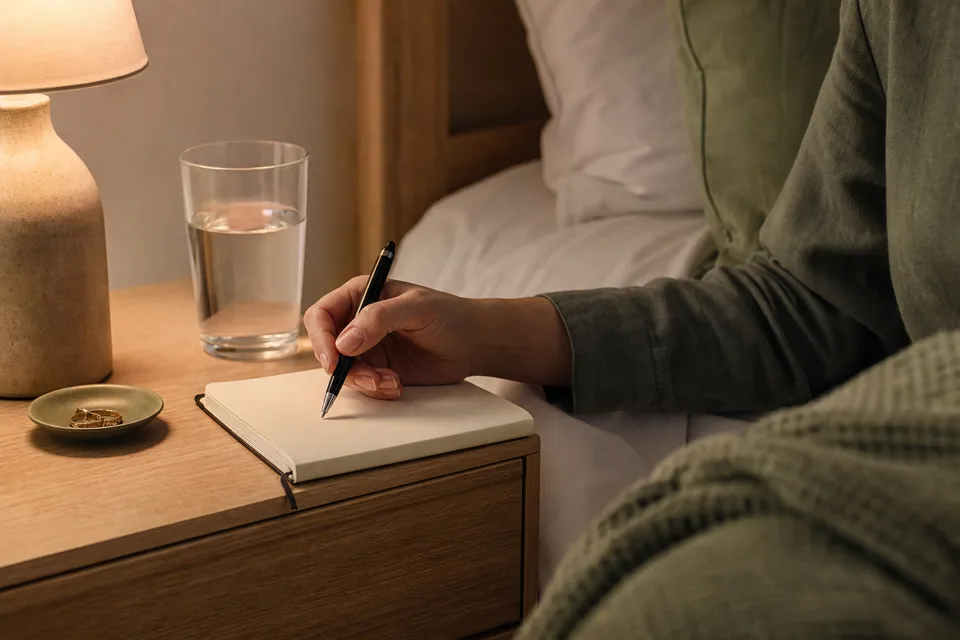
For a week or two, make a quick note of:
- When your shift finished
- When you tried to sleep
- Roughly when you fell asleep
- When you woke
- Whether you napped
- Whether you had caffeine late in the shift
- How sleepy you felt during your next shift
You're simply looking for patterns.
Perhaps late coffee consistently lines up with difficulty falling asleep. Maybe your room becomes noisy at midday. Perhaps sleeping immediately after work gives you much more sleep than delaying it.
That information is more useful than chasing a theoretically perfect routine.
When might night-shift sleep problems need more help?
An occasional poor sleep after a night shift is common.
It's worth discussing the problem with your GP or occupational health service if you're regularly unable to get enough sleep, experiencing persistent insomnia around your work schedule, or struggling with excessive sleepiness when you need to be awake.
There is also a recognised condition called shift work disorder. In simple terms, this is when a person's work schedule repeatedly overlaps the time they would normally sleep and is associated with ongoing insomnia, excessive sleepiness, or both.
That doesn't mean everyone who feels tired after night work has a sleep disorder.
Studies have produced quite different estimates of how common shift work disorder is, partly because researchers have used different definitions and methods.
That's a good reason not to diagnose yourself from an online checklist.
It is also worth getting advice if another problem appears to be interfering with your sleep, such as persistent loud snoring with pauses in breathing, restless legs or sleepiness that seems far greater than your work schedule would explain.
A realistic night-shift sleep plan
If all this advice feels like too much, simplify it.
Before your next run of night shifts, decide roughly when you intend to sleep.
When you get home, make the room dark, quiet and comfortable. Think about when you had your last caffeine rather than automatically having another coffee near the end of the shift.
Give yourself a genuine opportunity to sleep.
Then watch what happens over several shifts.
If the routine works reasonably well, keep it.
If it repeatedly doesn't, change one thing at a time so you can tell what actually helps.
Night-shift sleep is rarely perfect. It doesn't need to be.
The aim is to build a routine that gives you enough rest to function safely and reasonably well despite working at a time when your body would normally expect to be asleep.
Sources & references
The health information in this guide is based on these sources. Links open in a new tab.
- Health and Safety Executive: Hints and tips for shift-workers
- Health and Safety Executive: Fatigue
- Health and Safety Executive: Managing shift work: Health and safety guidance (HSG256)
- Jeon BM, et al. Effectiveness of sleep interventions for rotating night shift workers: a systematic review and meta-analysis
- Pallesen S, et al. Prevalence of Shift Work Disorder: A Systematic Review and Meta-Analysis
Sources last checked: 3 October 2026. Read how we use evidence.