
Sleep problems
Does alcohol help you sleep? Why a nightcap wakes you at 3am
The glass of wine that makes you drowsy at 10pm is often the same one that has you staring at the ceiling at 3am. Here is what is going on, and what to do about it.
Checked against NHS and other linked sources on 30 September 2026. Not reviewed by a doctor. How guides are made
The short answer
Alcohol can help you fall asleep faster, but it usually makes the rest of the night worse. As your body clears it, sleep tends to become lighter and more broken, often in the early hours. It also reduces REM sleep, can make you need the loo and can worsen snoring. The NHS lists alcohol as a common cause of insomnia and advises not drinking it in the 6 hours before bed.
This guide is general information, not medical advice. If you are worried about your symptoms, speak to a GP or pharmacist.
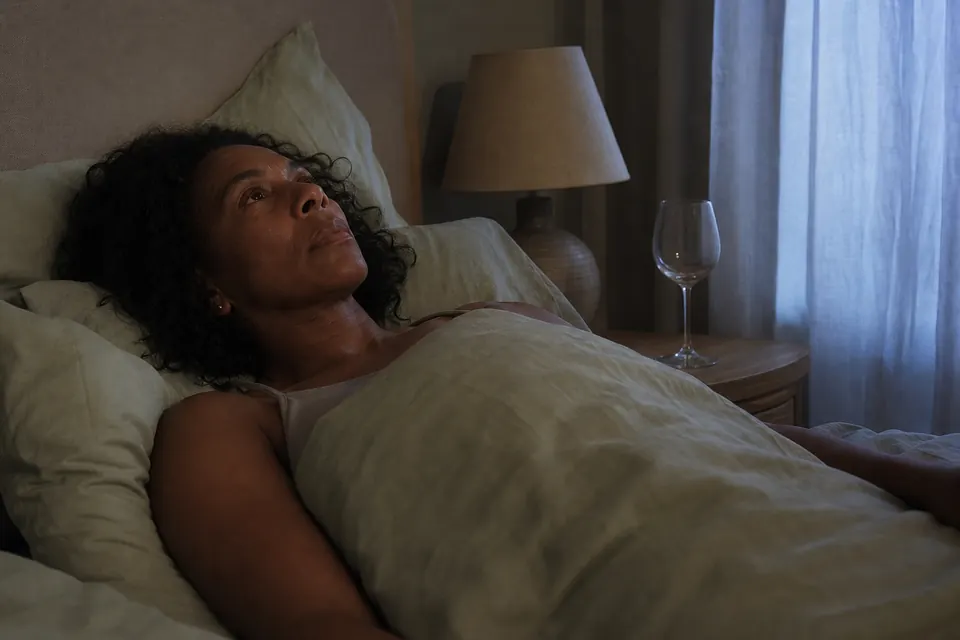
Does alcohol help you sleep? If you've ever had a glass of wine to take the edge off a long day and felt your eyelids go heavy on the sofa, it certainly feels like it does. Plenty of us use a drink as a kind of off switch. And for the first hour or two, it more or less works.
The trouble shows up later. You drop off quickly, then find yourself wide awake at 3am, hot, thirsty, needing the loo, with your mind already running. You get up feeling as though you slept, but somehow didn't rest. If that sounds familiar, you're not imagining it, and you're not alone. It's one of the most common patterns there is, and once you understand why it happens, it becomes much easier to do something about it.
This guide explains what alcohol actually does to a night's sleep and why the damage lands in the early hours. It also covers how long before bed you'd need to stop, and what to try instead if the nightcap has become a habit.
Why a drink makes you sleepy in the first place
Alcohol is a sedative. It slows your brain down, and that's why a drink or two can make you feel relaxed and drowsy soon after. Research backs up what many people notice: drinking before bed can shorten the time it takes to fall asleep, at least at first.
So the feeling you get isn't a trick. It's real. The problem is that falling asleep is only the opening few minutes of a night that has to last seven or eight hours. What alcohol gives you at the start, it tends to take back, with interest, later on.
It helps to think of it like borrowing. You borrow some quick sleepiness at 10pm, and the repayment is due in the second half of the night, exactly when you'd most like to stay asleep.

What happens at 3am: the rebound
Your body clears alcohol steadily through the night. The NHS says one unit is roughly the amount the average adult can process in an hour, although this varies from person to person. So if you've had a few drinks, your body is still working through them for hours after you've gone to bed.
While alcohol is still in your system, early sleep can feel heavy. But once your body has broken it down, the calming effect wears off and sleep tends to swing the other way. It becomes lighter and more fragmented, and you wake more often. The Sleep Foundation describes this happening especially in the second half of the night, as blood alcohol levels fall.
That's the 3am wake-up in a nutshell. It isn't random, and it usually isn't a sign that something is wrong with you. It's the drink wearing off at the point in the night when your sleep is naturally lighter anyway. If you already tend to wake up in the night, alcohol can make that pattern more likely and harder to settle from.
Here's the part that surprises most people. Many of these wakings are brief, and you may not remember them. You simply wake in the morning feeling as though the night didn't quite count.
Why you wake up tired even after a full night
Sleep isn't one even state. Through the night you move through lighter sleep, deep sleep and REM sleep, the stage when most dreaming happens. The later part of the night normally holds more REM.
Drinkaware explains that alcohol means you spend less time in REM sleep, and that even a couple of drinks can have an effect. The end result is that you wake up feeling less refreshed. So you can spend eight hours in bed, fall asleep in minutes, and still feel flat, foggy and short-tempered the next day.
This is why "I slept fine, I just feel rough" is such a common morning-after line. The amount of time looked fine. The quality underneath it didn't. If feeling unrefreshed is a regular thing for you, our guide to waking up tired covers the other common causes worth ruling out too.
The other ways a drink breaks up your night
The rebound isn't the only thing going on. Alcohol nudges your sleep in a few other directions at the same time, and each one adds another reason to wake.
Needing the loo. Alcohol is a diuretic, which means it makes your body lose extra fluid. Drinkaware notes this can mean getting up in the night to go to the toilet. If you already wake up to pee at night, a few drinks can easily add a trip or two.
Thirst and a dry mouth. Because alcohol makes you lose fluid, including through sweat, it can leave you dehydrated. Waking up parched, with a dry mouth or a headache, is a familiar sign.
Feeling hot. Lots of people describe waking up hot and sweaty after drinking. That fits with the extra fluid loss through sweat that Drinkaware describes.
A racing heart and mind. The Sleep Foundation notes that alcohol can push your heart rate up during sleep as your body processes it. If you wake at 3am feeling wired and anxious, that restless, alert state can make it very hard to drift back off.
None of these on their own is a disaster. Together, they explain why a boozy night so often feels like a night of broken sleep.
Alcohol and snoring: why it can matter more than you think
Alcohol relaxes the muscles in your body, including the ones in your throat. Drinkaware explains that this means the tissue in your throat, mouth and nose can stop air flowing smoothly and is more likely to vibrate. In plain terms, you're more likely to snore. The NHS lists drinking too much alcohol as one of the things that make snoring more likely, and advises not drinking too much if snoring is a problem.
For some people it goes further. Drinkaware also notes that alcohol increases the chance of sleep apnoea, where your airway narrows and your breathing stops and starts while you sleep. The NHS says sleep apnoea needs treatment because it can lead to more serious problems, and that reducing how much alcohol you drink is one of the lifestyle changes that can help.
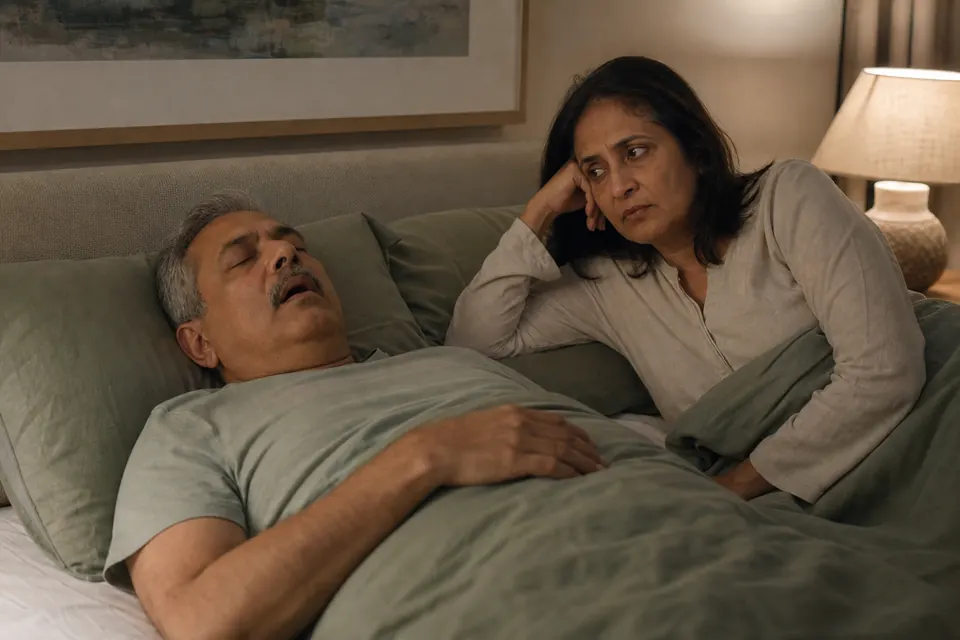
The signs to watch for are loud snoring, gasping, snorting or choking noises, breathing that stops and starts, and feeling very tired during the day. Often the person who notices is the one lying next to you. If a partner says you're much louder after a few drinks, or that you sometimes seem to stop breathing, that's worth taking seriously. Our guide to snoring vs sleep apnoea walks through how to tell the difference.
Is it the amount, or the timing?
Both matter, and they're linked.
The more you drink, the longer your body needs to clear it. Drinkaware gives a useful rule of thumb: on average it takes about an hour to process one unit, so six units would take the average person around six hours. That's only an average, and it varies a lot between people.
Units add up faster than most of us realise. The NHS unit guide says a standard 175ml glass of wine at 12% is 2.1 units, a large 250ml glass is 3 units, and a pint of higher-strength lager is 3 units. A single 25ml shot of spirits is 1 unit. So two large glasses of wine over dinner is roughly 6 units, which could still be working its way through you well into the night.
That's why "just a couple" can have a bigger effect than you'd expect. It's also why the same two drinks at 6pm and at 10.30pm can lead to very different nights. The earlier drink has far more time to clear before you're asleep.

How long before bed should you stop drinking?
You'll see two different answers, and it's worth knowing where each comes from.
The NHS insomnia guidance is the stricter of the two. It advises not drinking alcohol, tea or coffee at least 6 hours before going to bed. The Sleep Foundation suggests avoiding alcohol for at least 3 hours before bedtime, and says some people may benefit from stopping earlier or not drinking at all.
If your sleep is fine and you're simply curious, the 3-hour mark is a reasonable minimum. If you're already struggling with sleep, the NHS 6-hour rule is the better starting point. For an 11pm bedtime, that means finishing your last drink by around 5pm, which in practice often means having a drink-free evening, or having one earlier with food.
The Sleep Foundation adds that some people may need even longer. That includes if you drink several drinks in a short time, drink on an empty stomach or are especially sensitive to alcohol. It also applies if you're already short of sleep, or take medicines that strengthen alcohol's effects. If you're not sure whether a medicine you take interacts with alcohol, a pharmacist can tell you.
It's worth saying plainly: there is no timing trick that makes a lot of alcohol kind to your sleep. Spacing helps with a drink or two. It doesn't cancel out a heavy night.
The nightcap trap: when a drink becomes your sleep aid
This is the part that's easy to slide into without noticing.
It starts reasonably enough. You're stressed, you can't switch off, and a glass of wine helps you drop off. So you do it again. But because the drink breaks up the second half of the night, you wake up more tired. You lean on coffee to get through the day, the caffeine makes it harder to fall asleep that evening, and the wine starts to feel even more necessary. The Sleep Foundation describes exactly this cycle.
Over time, a nightcap can shift from something you enjoy to something you feel you need in order to sleep at all. That's a signal worth listening to. It doesn't mean you've done anything wrong. It means the drink is covering up a sleep problem that deserves proper help.
There's a knock-on effect when you stop, too. Drinkaware notes that temporary insomnia is a common side effect of alcohol withdrawal. So if you've been drinking most nights and then stop, your first few nights may actually feel worse before they get better. Knowing that in advance makes it much easier to stick with. It's a phase, not proof that you can't sleep without a drink.
If you've been using alcohol to cope with racing thoughts at night, it's worth reading about gentler ways to settle a busy mind that don't come with a 3am payback.
What to try instead tonight
You don't have to go teetotal to sleep better. The NHS points out that even setting a few drink-free days a week or switching to lower-strength drinks can be good steps. Here are some practical swaps that tend to help.
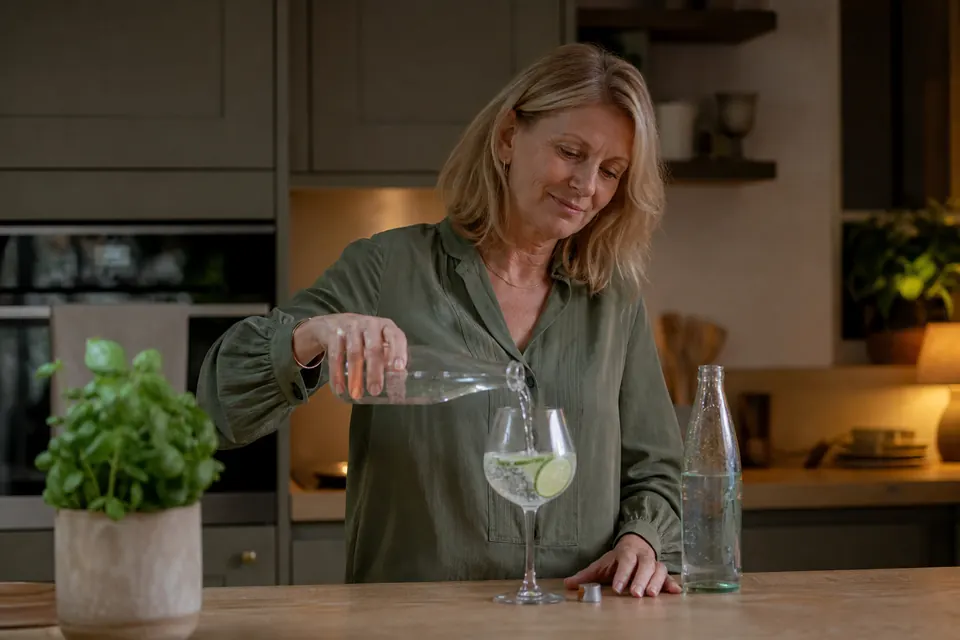
Keep the ritual, change the glass. Often the drink is really about the moment: the end of the working day, the sit-down, the change of pace. Sparkling water with lime in a wine glass, a non-alcoholic beer, or a warm milky drink can keep the moment without the alcohol.
Move it earlier. If you're going to drink, have it with an early meal rather than as the last thing before bed. That gives your body more hours to clear it.
Drink with food and alternate with water. Drinkaware suggests limiting yourself to one or two drinks and alternating with water or soft drinks.
Give yourself drink-free nights. The UK guidance is to keep to no more than 14 units a week, spread across 3 or more days, with several drink-free days. Drinkaware notes that having drink-free days can help you sleep better and find it easier to wake up in the morning.
Build a proper wind-down. The NHS suggests relaxing for at least an hour before bed, for example with a bath or a book, and keeping your bedroom dark and quiet. If a drink has been doing the job of relaxing you, something else needs to take its place.
If caffeine is part of the same loop, it's worth looking at that too. Our guide on how long before bed to stop caffeine covers the other half of the wine-and-coffee cycle.
A simple two-week test to see what alcohol is doing to you
The most convincing evidence is your own. Rather than taking anyone's word for it, try a short, honest experiment.
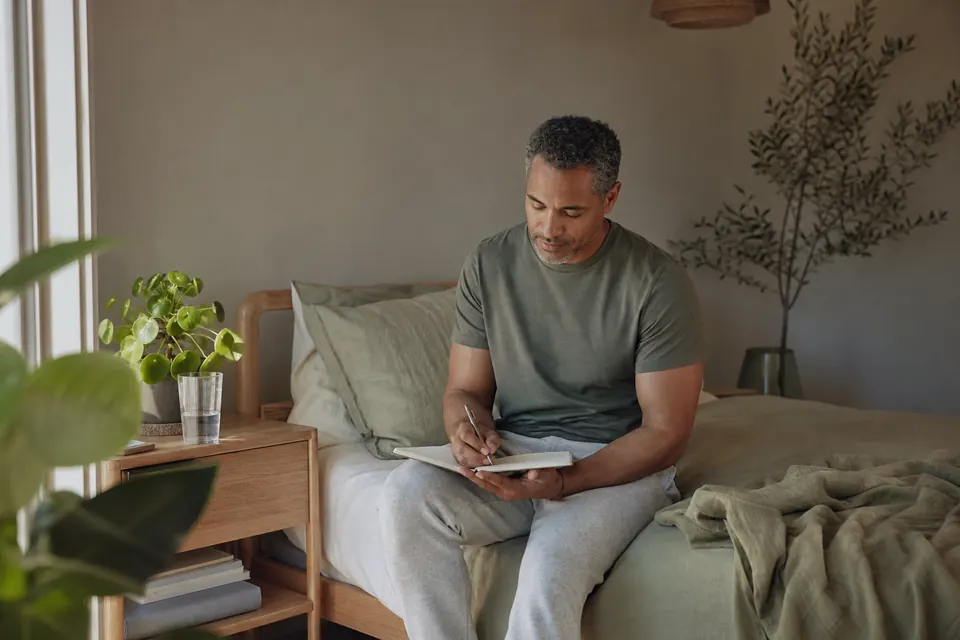
For two weeks, keep a quick note each morning. Write down whether you drank the evening before, roughly how much and what time you had your last drink. Then note how long it seemed to take to fall asleep, whether you woke in the night and when, and how rested you felt on a scale of 1 to 5.
In the first week, carry on as normal. In the second, try either no alcohol, or stopping at least 6 hours before bed. Then compare the two weeks side by side.
Most people find the pattern jumps out quickly. The early-hours wake-ups cluster on drinking nights. The "slept fine but feel rough" mornings follow the later drinks. That's far more persuasive than any rule, because it's your life, your drinks and your nights.
If you'd like a ready-made way to do this, our free online sleep diary lets you log seven nights in your browser and print a summary you can take to a GP if you need to. Try not to check the clock during the night for the sake of the diary. Rough estimates in the morning are enough.
When your sleep problem needs more than cutting back
For many people, drinking less or earlier makes a real difference within a week or two. But sometimes it doesn't, and that tells you something useful.
If you've had trouble sleeping for months, even on nights when you don't drink, the NHS says it's worth seeing a GP, particularly if it's making it hard to cope with daily life. Long-term insomnia has good treatments. The main one is a structured talking therapy called CBT for insomnia, which a GP can talk to you about. It works on the habits and worries that keep you awake, rather than masking them.
It's also worth being honest with yourself about the drinking side. The NHS suggests you may need help if you often feel the need to have a drink, other people warn you about how much you're drinking, or you think your drinking is causing you problems. A GP is a good place to start, and you can also call Drinkline, the free national alcohol helpline, on 0300 123 1110 in confidence.
One safety point really matters here. If you drink heavily every day and get symptoms like shaking, sweating, feeling sick or anxiety when you try to stop, the NHS advises getting medical help before you stop, because stopping suddenly can be dangerous. Call 999 or go to A&E if you or someone else has severe withdrawal symptoms such as seizures, hallucinations or confusion.
And if loud snoring, gasping or pauses in your breathing carry on even on sober nights, mention that to a GP too. That needs a different kind of check.
The short version to take away
Alcohol can help you fall asleep, but it's a poor sleep aid. It tends to break up the second half of the night, cut down REM sleep, send you to the loo, make you hot and thirsty and make snoring worse. That's why so many drinking nights end with a 3am wake-up and a flat, tired morning.
- If sleep is a struggle, aim to finish your last drink at least 6 hours before bed, as the NHS advises.
- Remember that units stack up quickly, and your body clears roughly one an hour on average.
- Keep the evening ritual but swap the drink, or have it earlier with food.
- Expect a few rougher nights if you've been drinking most evenings and then stop. It usually passes.
- Run a two-week comparison so you can see the effect for yourself.
- See a GP if sleep is still poor for months, if you're worried about your drinking, or if snoring or breathing pauses carry on regardless.
You don't need to give up something you enjoy to sleep well. Knowing what that nightcap is really costing you just means you get to choose when it's worth it.
Sources & references
The health information in this guide is based on these sources. Links open in a new tab.
- NHS: Insomnia
- NHS: Alcohol units
- Drinkaware: Alcohol and sleep
- Sleep Foundation: Alcohol and Sleep
- NHS: Snoring
- NHS: Sleep apnoea
- NHS: Alcohol support
- NHS: Alcohol-use disorder
- NHS Better Health: Drink less alcohol
Sources last checked: 30 September 2026. Read how we use evidence.