
Sleep problems
Why do I wake up with a dry mouth? Common causes and what helps
Most dry mornings come down to how you breathe at night, what you drank or a medicine you take. Here is how to work out which, and when to see a GP.
Checked against NHS and other linked sources on 27 September 2026. Not reviewed by a doctor. How guides are made
The short answer
Waking up with a dry mouth usually means you breathed through your mouth while you slept, often because of a blocked nose or snoring. Not drinking enough and some medicines are other common causes. The NHS says a dry mouth is rarely a sign of anything serious, but see a GP if it lasts all day or comes with other symptoms.
This guide is general information, not medical advice. If you are worried about your symptoms, speak to a GP or pharmacist.

You wake up with your tongue stuck to the roof of your mouth and reach for the glass by the bed. By the time you've had a shower it feels normal again. The next morning, the same thing happens.
Drinking more water is the usual advice, and sometimes it's enough. But the more useful question is when the dryness goes away. That tells you a lot about what's causing it.
Why your mouth dries out overnight
Saliva keeps your mouth moist. When less of it is made, or it dries out faster than usual, your mouth feels dry. Doctors call that feeling xerostomia.
At night the most common culprit is breathing through your mouth. The NHS lists it as one of the main causes of a dry mouth. It can happen if your nose is blocked or you sleep with your mouth open. Air passing over your tongue and gums for hours dries them out, and you aren't sipping anything to top them up.

Does it clear up after you get up?
This is the most useful thing to notice, and it's a rule of thumb rather than a diagnosis.
- Dry on waking, fine by mid-morning: the cause is probably something that happens at night. Think mouth breathing, snoring, a blocked nose, or alcohol the evening before.
- Dry all day, not just in the morning: the cause is more likely to be something that affects you around the clock. Common examples are a medicine, not drinking enough, or a health condition.
If yours is the all-day kind, the sections on medicines and other conditions below matter most.
Is a blocked nose making you breathe through your mouth?
If your nose is blocked, you'll breathe through your mouth without choosing to. Colds, hay fever and a nose that always feels a bit stuffy can all do it.
The NHS says a pharmacist may suggest a decongestant if a blocked nose is behind your dry mouth. Some decongestant sprays should only be used for a few days at a time, so read the label. Our guide on how to sleep with a blocked nose explains the limits and other things that help.
Could snoring be the reason?
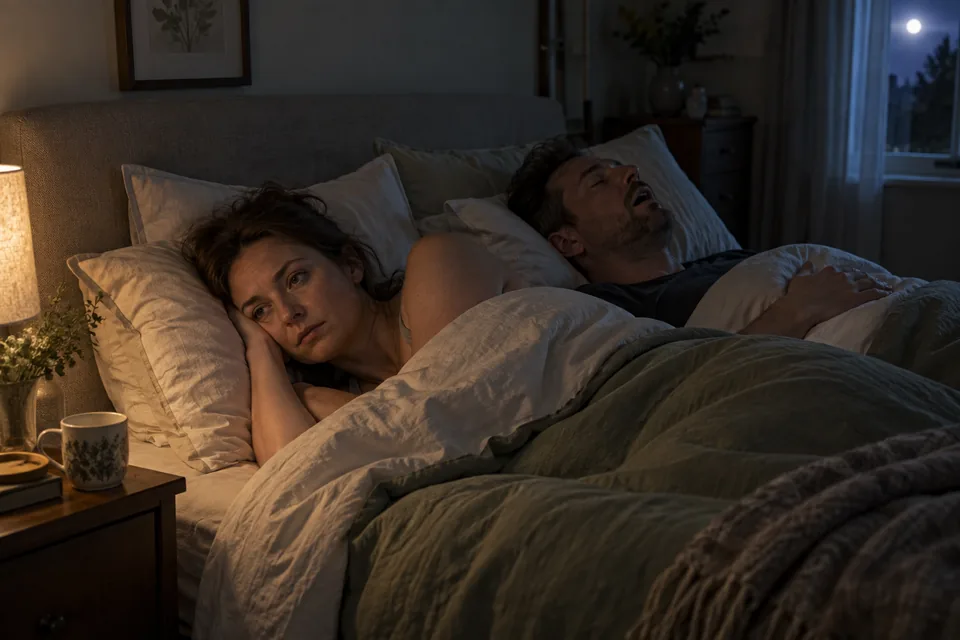
Snoring often goes with sleeping with your mouth open. The NHS lists your mouth falling open during sleep as one cause of snoring. If you share a bed, ask your partner whether you snore and whether your mouth hangs open.
Most snoring isn't serious. But snoring can also be a sign of sleep apnoea, where your breathing stops and starts while you sleep. A dry mouth on its own doesn't mean you have it. See a GP if someone has seen you stop breathing, gasp, snort or choke in your sleep. The same goes if you feel very tired during the day.
Sleep apnoea can make accidents caused by tiredness more likely, including car accidents. Don't drive if you feel sleepy. Our guide to snoring or sleep apnoea covers the warning signs.
Could a medicine be causing it?
Lots of medicines can cause a dry mouth. The NHS suggests checking the leaflet that comes with yours to see if it's listed as a side effect.
Medicines often linked to it include some antidepressants, blood pressure medicines and water tablets (diuretics). Strong painkillers called opioids and some medicines for Parkinson's disease or psychosis can also do it. Taking several medicines at once makes it more likely.
Don't stop a prescribed medicine without talking to a GP or pharmacist first, even if you think it's the cause. They may be able to change the dose, the timing or the medicine itself, or suggest something to ease the dryness.

How drinks and alcohol play a part
Not drinking enough, sweating a lot or being ill can all leave you dehydrated, and a dry mouth is one sign of that.
The NHS advises not drinking lots of alcohol, caffeine or fizzy drinks if you have a dry mouth, and not smoking. A few drinks in the evening can be enough to make the next morning worse.
If you're also waking up to go to the toilet, you may be tempted to cut back on fluids before bed. Drinking a bit less in the last hour or two is reasonable, but don't cut down so much that you're thirsty. Our guide on waking up to pee at night goes into this.
What to try tonight
These come from NHS advice on easing a dry mouth.
- Keep a glass of cold water by your bed and take small sips if you wake.
- Go easy on alcohol, caffeine and fizzy drinks in the evening.
- Use lip balm if your lips are dry too.
- Take dentures out before you sleep.
- If your nose is blocked, deal with that first.
- During the day, sugar-free gum or sugar-free sweets can get saliva flowing.
A pharmacist can suggest gels, sprays and lozenges that keep your mouth moist. Not all of them suit everyone, so ask which is right for you. The NHS says not to use acidic artificial saliva products if you have your own teeth.

Protect your teeth while it lasts
Saliva helps protect your teeth. With less of it, you're more likely to get tooth decay. UK dental guidance lists a dry mouth as one of the things that raise the risk.
Brush twice a day and use an alcohol-free mouthwash. Cut down on sugary, acidic, spicy and salty food. If your mouth is dry most days, mention it at your next dental check-up.

Is mouth taping a good idea?
Taping your mouth shut at night is popular on social media as a way to stop mouth breathing. The evidence doesn't back it up.
A 2025 review looked at 10 studies involving 213 people. It found the evidence doesn't support mouth taping as a treatment for sleep-related breathing problems. It also warned of a potentially serious risk of harm for people who try it without checking first.
If you snore, might have sleep apnoea, or have a blocked nose, don't tape your mouth. Find out why you're breathing through it instead.
A one-week check to take to your GP or pharmacist
If a dry mouth keeps coming back, spend a week noting a few things each morning. It takes a minute and gives a GP or pharmacist something specific to work with.
- Was your mouth dry when you woke up?
- Had it gone by mid-morning, or did it last all day?
- Was your nose blocked?
- Did you drink alcohol the evening before?
- Did anyone notice you snoring or breathing through your mouth?
- Have you started or changed any medicine recently?
After a week, look for a pattern. If most dry mornings follow a blocked nose or an evening drink, start there. If it's dry all day whatever you do, take the notes and a list of your medicines to a GP or pharmacist.
When a dry mouth can be a sign of something else
Most of the time a dry mouth has a simple cause. Sometimes one that won't go away is linked to a condition that needs checking. This isn't a list to diagnose yourself with. It's a list of reasons to see a GP.
- Diabetes: feeling thirsty all the time, peeing more than usual and feeling very tired are common symptoms.
- Sjögren's syndrome: a condition where the glands that make tears and saliva stop working properly. It causes a dry mouth, dry eyes and extreme tiredness.
- Oral thrush: a fungal infection of the mouth. Sore white patches are one sign.
Anxiety can also cause a dry mouth, and so can cancer treatment such as radiotherapy or chemotherapy. If you're having cancer treatment, talk to your care team.
Sources & references
The health information in this guide is based on these sources. Links open in a new tab.
- NHS: Dry mouth
- NHS: Sleep apnoea
- NHS: Snoring
- Review: Xerostomia, causes and management strategies
- NHS: Sjögren's syndrome
- NHS: Diabetes
- GOV.UK: Delivering Better Oral Health, dental caries
- PLOS One: Mouth taping in sleep-disordered breathing, a systematic review (2025)
Sources last checked: 27 September 2026. Read how we use evidence.