
Sleep problems
Why Does Sleep Change as You Get Older? What’s Normal After 50 and 60?
Understanding that difference can save you from chasing an unrealistic version of the sleep you had at 25. It can also stop you dismissing a treatable problem as simply part of getting older.
Checked against NHS and other linked sources on 5 September 2026. Not reviewed by a doctor. How guides are made
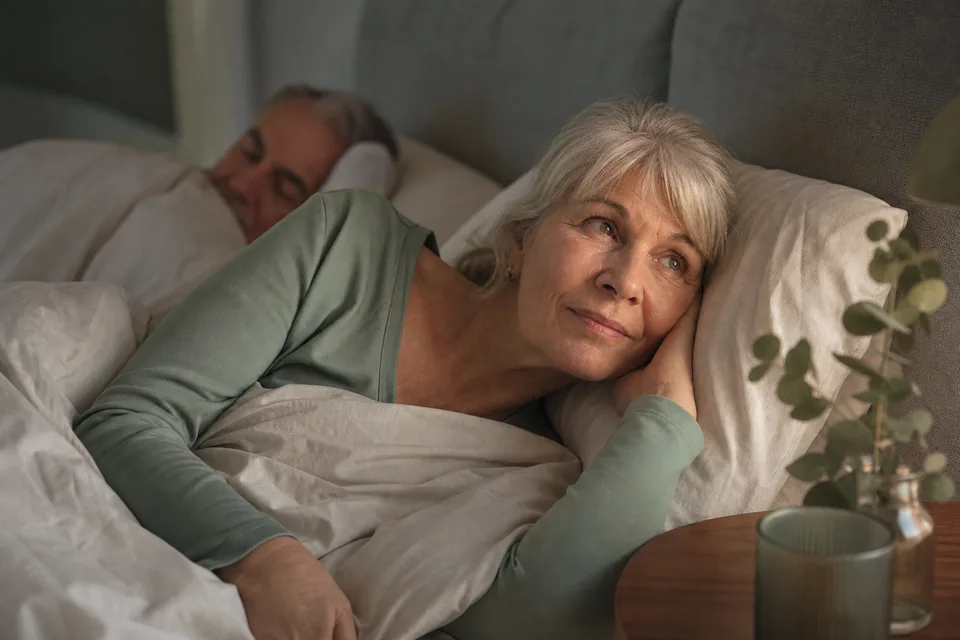
Perhaps you've noticed that you're ready for bed earlier than you used to be, only to find yourself wide awake before the rest of the house.
Or maybe you're sleeping for roughly the same number of hours but waking more often along the way. A noise that once wouldn't have bothered you now has you staring at the ceiling at 3am.
If that sounds familiar, you're not imagining it. Sleep really does change as we get older.
But here's the important part: sleep changing isn't the same thing as sleep becoming bad.
Some differences are a normal part of ageing. Others deserve a little more attention, particularly if they're leaving you exhausted during the day.
Understanding which is which can make your nights feel a lot less mysterious.
The short answer
Sleep often becomes lighter and more easily interrupted as you get older, while your body clock may shift so you feel sleepy and wake earlier. But older adults don't suddenly stop needing sleep. Around 7 to 9 hours is still a useful general guide. If poor sleep regularly affects how you feel or function during the day, don't simply blame your age.
This guide is general information, not medical advice. If you are worried about your symptoms, speak to a GP or pharmacist.
Your sleep really does change with age. Here's what's happening
Think back to how you slept when you were younger.
Perhaps you could sleep through noise, stay in bed late after a late night, or barely register waking before dropping straight back off.
Sleep can become less forgiving with age.
You tend to spend less time in the deepest stages of sleep and more time in lighter sleep. That means noises, temperature changes, movement or a trip to the bathroom can wake you more easily.
Your internal body clock can change too. For many people, the whole sleep window gradually shifts earlier.
That can mean feeling genuinely sleepy at 9pm and equally genuinely awake at 5am.
Neither automatically means something is wrong.
There isn't a birthday when this suddenly happens, either. Sleep changes gradually, and there's considerable variation from one person to another.
That's why comparing your sleep with somebody else's can be surprisingly unhelpful.
The more useful comparison is often with your own pattern and how you feel during the day.
Need less sleep as you get older? Not quite
This is probably one of the biggest misunderstandings about sleep and ageing.
It's easy to see where it comes from. If you're sleeping for shorter stretches or waking earlier than you did at 30, it can feel as though your body simply doesn't want as much sleep anymore.
But that's not the same as needing less.
Older adults generally still need around 7 to 9 hours of sleep.
And don't get too hung up on reaching exactly eight hours.
Eight isn't a magic number. Your individual sleep need matters more than hitting a perfect target.
If you're sleeping seven hours and waking naturally feeling refreshed, that's very different from getting seven broken hours and struggling to keep your eyes open every afternoon.
The number on the clock only tells part of the story.
Our guide to how much sleep adults need looks at this more closely, including why chasing a perfect eight hours can sometimes create more worry than it solves.
Why are you suddenly awake so early?
This is one of those changes that can feel particularly strange.
You haven't set an alarm. There's nowhere you need to be. Yet your eyes open at 5.15am and your body seems convinced the day has begun.
One reason is your circadian rhythm, the internal timing system that helps organise when you feel sleepy and alert.
That timing can shift earlier as you get older.
In simple terms, your body clock can become more of a morning person, even if you never asked it to.
You might start feeling sleepy earlier in the evening and naturally wake earlier in the morning.
If you're still getting enough sleep and feel well during the day, an earlier schedule isn't necessarily a problem.
The difficulty comes when your lifestyle and your body clock disagree.
Perhaps you stay awake until 11.30pm because that's when you've always gone to bed, even though you've been fighting sleep since 9.30. If your body still wakes you at 5.30am, you've suddenly lost two hours of potential sleep.
Sometimes the answer isn't to fight the early waking. It may be to look at the whole sleep schedule.
Waking more often doesn't always mean you're sleeping badly
Here's another change that can be unsettling.
Sleep tends to become more fragmented as we get older. In other words, you may surface from sleep or wake completely more often during the night.
Because your sleep is lighter, things that once passed unnoticed can become enough to wake you.
A partner moving. Traffic outside. The room getting too warm. Needing the toilet.
And once you've noticed that you're awake, your brain can make matters worse:
Why am I awake again?
What time is it?
How many hours have I got left?
That calculation rarely helps.
Brief awakenings are part of normal sleep at any age. What matters more is how long you're awake, how often it happens and whether the pattern is affecting you the following day.
If night waking has become the main problem for you, our guide to waking up at night looks more closely at what can cause it and what you can do when it happens.
That deep-sleep number on your watch isn't a diagnosis
You may have noticed another apparent sign of ageing on your sleep tracker.
Perhaps your watch tells you that you had 42 minutes of deep sleep last night. The night before it was 58 minutes.
Suddenly, 16 minutes of sleep starts feeling terribly important.
There really are age-related changes in sleep structure, including a tendency to spend less time in deep, slow-wave sleep.
But that doesn't mean you need to chase a particular number.
Consumer sleep trackers estimate sleep stages. They don't measure sleep in the same way as a clinical sleep study, and one low deep-sleep score doesn't tell you that something is wrong.
They're generally more useful for spotting patterns than judging individual nights.
If you find yourself worrying about what your watch is telling you, read Are Sleep Trackers Accurate? What Your Watch Can and Can't Tell You.
And keep coming back to a much simpler question:
How are you actually feeling?
A poor sleep score doesn't automatically mean you've slept badly. Equally, a glowing score doesn't cancel out persistent exhaustion.
And then there's the 3am bathroom trip
For many people, night waking isn't mysterious at all.
You wake because you need the toilet.
Once might be little more than an inconvenience. Several trips can break the night into pieces and make it much harder to feel properly rested the following morning.
There are plenty of reasons this can happen, and it's not something you simply have to accept because you're getting older.
The timing of drinks in the evening can sometimes make a difference. But if you're regularly getting up several times to urinate, particularly if this is new or getting worse, it's worth mentioning to your GP.
Could your afternoon nap be stealing sleep from tonight?
A nap can feel wonderful after a poor night.
And there's nothing inherently wrong with napping as you get older.
The trouble starts when a long or late nap takes away some of the sleep pressure you've been building during the day.
Think of sleep pressure as your body's appetite for sleep. The longer you're awake, the stronger that appetite generally becomes.
Sleep for a couple of hours late in the afternoon and you may arrive at bedtime simply not sleepy enough.
Then you struggle to fall asleep, sleep badly, feel tired the following day and take another long nap.
You can see how the circle forms.
If you enjoy a nap and it isn't interfering with your night-time sleep, there may be no reason to eliminate it.
But if your nights have become difficult, the timing and length of your naps are worth looking at.
Retirement can change your sleep more than you expect
There's another change that isn't caused by ageing itself, but often happens at roughly the same time.
Retirement.
For years, your alarm may have gone off at the same time. You travelled to work, ate at fairly predictable times, saw daylight on the journey and had a reason to distinguish weekdays from weekends.
Then suddenly much of that structure disappears.
That freedom can be wonderful.
Your body clock, however, rather likes regular cues.
Wake-up times may start drifting. Breakfast gets later. You might spend less time outdoors or become less active without really noticing.
None of this means retirement is bad for sleep. It simply means you may need to create some of the structure that work used to provide automatically.
A reasonably consistent morning routine, daylight and regular activity can be surprisingly useful.
Before blaming your age, look at what else has changed
This is where we need to be careful with the phrase “I'm just getting older.”
Yes, ageing changes sleep.
But life changes too.
Perhaps you're exercising less. Maybe pain makes it harder to get comfortable. You may be taking medication that you weren't taking five years ago.
Caffeine can matter too, particularly later in the day.
Alcohol deserves a mention because it can be deceptive. A drink may make you feel sleepy initially, but alcohol can disrupt sleep later in the night.
And sometimes there's a sleep problem that deserves attention in its own right.
The useful question isn't:
“Is this because I'm getting old?”
It's:
“What's changed, and is there anything here I can improve?”
That's a much better place to start.
One important point about medication: don't stop or change prescribed medicines because you think they're affecting your sleep without speaking to your doctor or pharmacist first.
A few boring habits can make a surprisingly big difference
Sleep advice isn't always exciting.
In fact, some of the things that help most are almost annoyingly ordinary.
But ordinary is useful if it works.
Give your mornings a proper start
Daylight is one of the strongest signals your body clock receives.
Getting outside during the day, particularly earlier in the day, can help reinforce the difference between daytime and night-time.
It doesn't require a heroic morning routine.
A walk, sitting outside with a drink or simply spending some time in natural daylight is a start.
Keep some shape to your day
You don't need to run your life by the minute.
But reasonably consistent wake times, meals, activity and bedtime routines give your body useful timing cues.
This can become particularly helpful after retirement or another lifestyle change removes the schedule that used to happen automatically.
Keep moving
Regular physical activity can support sleep as well as general health.
That doesn't have to mean joining a gym. Walking, gardening and other activities you can comfortably maintain all count towards keeping your days active.
Look at caffeine before blaming your mattress
Caffeine can stay in your system for hours.
If falling asleep has become more difficult, try moving your last caffeinated drink earlier rather than assuming coffee or tea can't be involved because you've always drunk it.
Give lighter sleep fewer reasons to wake you
A bedroom that's dark, reasonably quiet and comfortably cool gives lighter sleep fewer opportunities to be interrupted.
None of these suggestions guarantees perfect sleep.
That's not the goal.
We're simply trying to make it easier for your natural sleep system to do its job.

What if you're doing everything “right” and still can't sleep?
Then it's probably time to stop collecting sleep tips.
Persistent insomnia isn't usually solved by endlessly adding another bedtime trick.
If you're regularly unable to fall asleep or stay asleep and it's affecting your days, there are evidence-based treatments available.
Cognitive behavioural therapy for insomnia, usually shortened to CBT-I, is specifically designed to address persistent insomnia rather than simply offering another collection of sleep-hygiene tips.
You can read our guide to CBT-I to see how it works.
And if lying awake at the beginning of the night is your main problem, start with our guide to what to do when you can't fall asleep.
The important point is simple:
Getting older doesn't disqualify you from getting help with your sleep.
When it's worth looking beyond “just getting older”
A slightly earlier bedtime isn't usually something to worry about.
Neither is occasionally waking during the night.
What deserves more attention is a persistent problem that's affecting your health, mood, concentration or ability to function during the day.
It's worth speaking to your GP if you're regularly struggling with sleep despite giving yourself enough opportunity to sleep, or if excessive daytime sleepiness is becoming a problem.
There are also some symptoms that shouldn't simply be blamed on age.
Loud snoring combined with pauses in breathing, choking or gasping during sleep can point towards sleep apnoea.
An uncomfortable urge to move your legs, particularly when you're resting in the evening or at night, can be associated with restless legs syndrome.
Persistent insomnia deserves attention too.
None of these automatically means something serious is wrong. They simply give you a better reason to discuss what is happening rather than assuming nothing can be done.

Your sleep at 65 doesn't have to look like your sleep at 25
Perhaps that's the most useful way to think about sleep and ageing.
Your sleep at 60, 65 or 70 may not look exactly like your sleep at 30.
You may prefer an earlier bedtime. You may wake earlier. You may notice more brief awakenings and spend less time in the deepest stages of sleep.
Some of that can be perfectly normal.
What matters is whether your sleep is working for you.
Are you getting enough overall? Do you usually feel reasonably refreshed? Can you stay alert and function during the day?
If the answer is yes, you may not need to “fix” your sleep simply because it has changed.
And if the answer is no, don't let your age convince you that nothing can be done.
Sometimes the most reassuring thing to discover isn't how to sleep exactly as you did twenty years ago.
It's realising that you don't have to.
Sources & References
National Institute on Aging. Sleep and Older Adults. US National Institutes of Health. https://www.nia.nih.gov/health/sleep/sleep-and-older-adults
Jahrami H, et al. Sleep health in the older adults: Architecture, circadian changes, and common sleep disorders. Ageing Research Reviews. 2026. DOI: 10.1016/j.arr.2026.103101 PMID: 41825783 https://pubmed.ncbi.nlm.nih.gov/41825783/
Mander BA, Winer JR, Walker MP. Sleep and Human Aging. Neuron. 2017;94(1):19–36. PMID: 28384471 https://pmc.ncbi.nlm.nih.gov/articles/PMC5810920/
Patel D, Steinberg J, Patel P. Insomnia in the Elderly: A Review. Journal of Clinical Sleep Medicine. 2018;14(6):1017–1024. PMID: 29852897 https://pmc.ncbi.nlm.nih.gov/articles/PMC5991956/
NHS. Sleep apnoea. https://www.nhs.uk/conditions/sleep-apnoea/
NHS. Insomnia. https://www.nhs.uk/conditions/insomnia/
NHS. Restless legs syndrome. https://www.nhs.uk/conditions/restless-legs-syndrome/
UCLH Integrated Sleep Services. Insomnia & Sleep Medicine Clinic. https://www.uclh.nhs.uk/our-services/find-service/integrated-medicine/insomnia-service
Khosla S, et al. Consumer Sleep Technology: An American Academy of Sleep Medicine Position Statement. Journal of Clinical Sleep Medicine. 2018;14(5):877–880. https://aasm.org/advocacy/position-statements/consumer-sleep-technology/
Lee YJ, et al. Performance of consumer wrist-worn sleep tracking devices compared to polysomnography: a meta-analysis. Journal of Clinical Sleep Medicine. 2025;21(3):573–582. https://pubmed.ncbi.nlm.nih.gov/39484805/
Sleep Foundation. Caffeine and Sleep. Medically reviewed by Dustin Cotliar, MD, MPH. https://www.sleepfoundation.org/nutrition/caffeine-and-sleep
Guy's and St Thomas' NHS Foundation Trust. Nocturia – getting up at night to pee. https://www.guysandstthomas.nhs.uk/health-information/nocturia-getting-night-pee
Sources & references
The health information in this guide is based on these sources. Links open in a new tab.
- National Institute on Aging: Sleep and Older Adults
- Jahrami H, et al. Sleep health in the older adults: Architecture, circadian changes, and common sleep disorders. Ageing Research Reviews. 2026.
- Mander BA, Winer JR, Walker MP. Sleep and Human Aging. Neuron. 2017;94(1):19–36.
- Patel D, Steinberg J, Patel P. Insomnia in the Elderly: A Review. Journal of Clinical Sleep Medicine. 2018;14(6):1017–1024.
- NHS: Sleep apnoea
- NHS: Insomnia
- NHS: Restless legs syndrome
- UCLH Integrated Sleep Services: Insomnia & Sleep Medicine Clinic
- American Academy of Sleep Medicine. Consumer Sleep Technology: An American Academy of Sleep Medicine Position Statement.
- Lee YJ, Lee JY, Cho JH, Kang YJ, Choi JH. Performance of consumer wrist-worn sleep tracking devices compared to polysomnography: a meta-analysis. J Clin Sleep Med. 2025;21(3):573-582.
- Sleep Foundation: Caffeine and Sleep
- Guy's and St Thomas' NHS: Nocturia, getting up at night to pee
Sources last checked: 5 September 2026. Read how we use evidence.