
Sleep problems / Field guide
Sleep Paralysis at Night: Why You Can’t Move and What May Help
Sleep paralysis can feel frightening, especially when you wake unable to move or sense someone in the room. Here is what is happening and what may help.

The short answer
Sleep paralysis is a brief period when you are mentally awake but cannot move or speak, usually as you are falling asleep or waking up. It can feel frightening, particularly if you sense someone in the room, see or hear something unusual, or feel pressure on your body. The episode normally passes on its own. Sleep disruption and irregular sleep can make episodes more likely, and frequent or distressing episodes are worth discussing with your GP.
You wake up and something feels wrong.
You know where you are. You may be able to see your bedroom and hear what is happening around you. But when you try to move, nothing happens. You might try to call out and find that you can’t do that either.
For some people, that’s all that happens. For others, the experience is much more unsettling. You may have the powerful impression that somebody else is in the room. You might see a shape, hear a sound or feel as though something is pressing on you.
Then, just as suddenly, you can move again.
If you’ve never experienced sleep paralysis before, it’s understandable to wonder what on earth just happened. The strange combination of being conscious while your body refuses to respond can make a short episode feel much longer than it really is.
The reassuring part is that sleep paralysis itself is generally considered harmless. Understanding what’s happening can also take some of the mystery out of it.
What is actually happening during sleep paralysis?
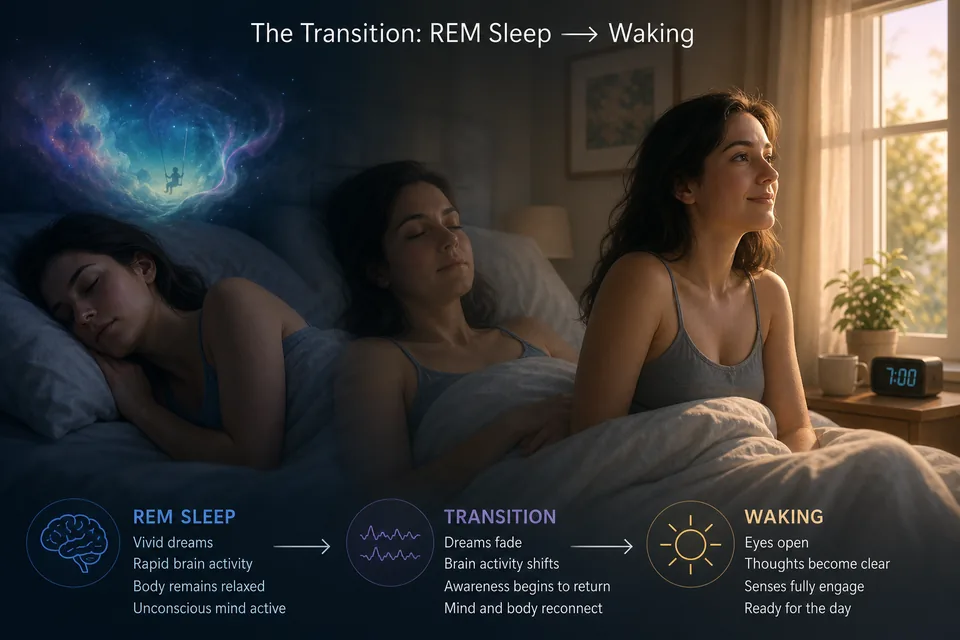
Sleep isn’t simply a matter of your brain switching off for the night. You move through different stages, including a stage called rapid eye movement, or REM, sleep.
REM is the stage most strongly associated with vivid dreaming. During REM sleep, your brain temporarily reduces activity in many of the muscles that allow you to move your body. This normal process helps prevent you from physically acting out most of what is happening in your dreams.
Usually, you don’t notice any of this.
With sleep paralysis, awareness returns while that temporary muscle immobility is still present. For a short period, your mind feels awake but your body hasn’t quite caught up.
That’s why you can be aware of your surroundings yet find yourself unable to sit up, move your arms or legs, or speak normally.
The episode ends when the transition catches up and normal voluntary movement returns.
If you’ve also experienced a sudden jolt just as you’re drifting off, that’s slightly different. Those movements are often called hypnic jerks. Sleep paralysis involves temporary inability to move rather than the sudden muscle movement typical of a sleep start.
Why can it feel as though someone is in the room?
This is probably the part of sleep paralysis that can be hardest to make sense of afterwards.
Some people don’t simply wake unable to move. They also experience extremely vivid sensations.
You might think you can see somebody standing near the bed. You may hear footsteps, voices or other sounds. Some people describe a feeling that somebody is watching them, while others experience pressure on their chest or a sensation of being pushed down.
The experience can feel completely real at the time.
That doesn’t mean somebody was actually in your room.
Sleep paralysis happens around the boundary between sleeping and waking, and dream-like experiences can sometimes continue into that period of awareness. In other words, parts of a dream can seem to spill into what feels like the waking world.
Knowing this doesn’t necessarily make an episode pleasant, but it can make it less mysterious.
If it happens again, being able to recognise I’ve experienced this before and it passed may be more useful than trying to work out what every sensation means while you’re still frightened.
How long does sleep paralysis normally last?
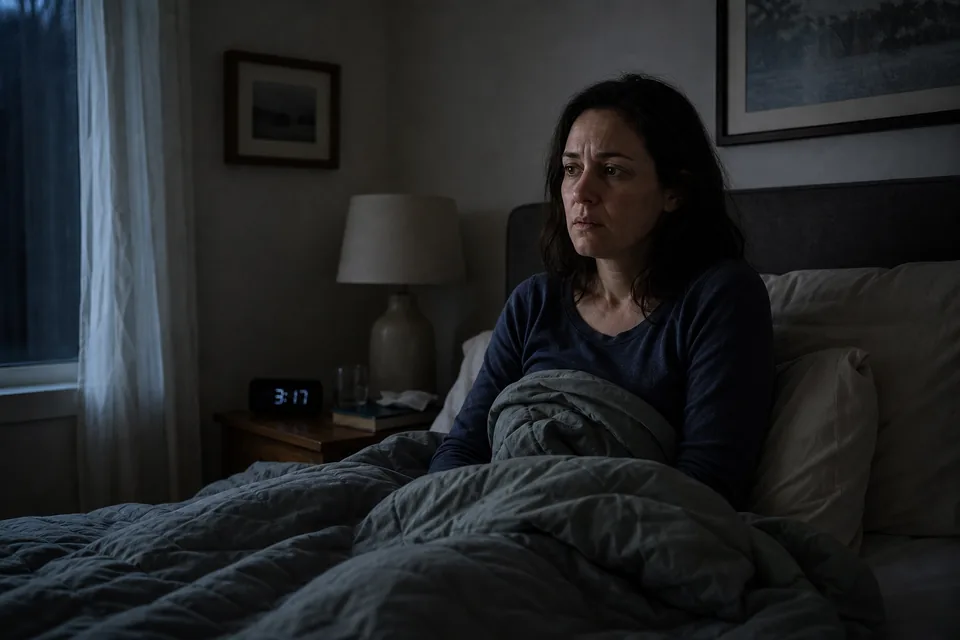
One of the peculiar things about sleep paralysis is that your perception of time isn’t necessarily very helpful during it.
An episode may feel as though it is going on and on, particularly when you’re frightened and concentrating on trying to move.
In reality, sleep paralysis is usually brief. The NHS describes episodes as lasting from a few seconds to several minutes.
Movement then returns.
You don’t need to force yourself fully awake afterwards if you feel comfortable settling back down. Equally, if you’re shaken by what happened, there’s nothing wrong with sitting up for a few minutes, letting yourself settle and returning to bed when you feel ready.
Try not to turn the rest of the night into a watch for the next episode. Lying there checking whether you’re about to become paralysed again can make it much harder to relax into sleep.
If that sort of alertness is becoming a wider problem, our guide to racing thoughts at night may help.
Why might sleep paralysis keep happening?
Sometimes there isn’t an obvious explanation.
Sleep paralysis has been associated with disrupted sleep patterns, not getting enough sleep and conditions that disturb normal sleep.
That makes your overall sleep pattern worth looking at, particularly if episodes started during a period when your routine changed.
Perhaps you’ve been going to bed at very different times each night. Maybe you’re regularly cutting your sleep short. Shift work, travel or periods of particularly disrupted sleep can also make your sleep schedule less predictable.
This doesn’t mean you need to construct a perfect bedtime routine or become anxious about getting an exact number of hours every night.
A better question is simply: has my sleep become noticeably more irregular or restricted recently?
If the answer is yes, there may be some fairly ordinary things worth addressing before assuming that something more complicated is going on.
Our guide to how much sleep adults need explains why there isn’t one magic number that everybody has to achieve.
What can you do while an episode is happening?
There isn’t a guaranteed technique that instantly ends sleep paralysis.
That matters because the internet is full of supposed tricks that can make you feel as though you’re failing if they don’t work.
You aren’t.
The episode will end even if you don’t manage to do anything clever.
If you recognise what is happening, reminding yourself that it is temporary may help reduce some of the panic:
This is sleep paralysis. I can breathe. It will pass.
You don’t have to fight your whole body to prove that you can move.
Some people find it less frightening to concentrate on staying calm and waiting for normal movement to return rather than repeatedly trying to force themselves upright.
If somebody who sleeps beside you knows that you experience sleep paralysis, you might also want to explain what happens. Simply having someone who understands why you seemed distressed afterwards can be reassuring.
And once the episode is over, resist the temptation to spend the next hour searching symptoms on your phone. If you want to make a note of what happened, do it in the morning.
Can changing your sleep reduce the chances of another episode?
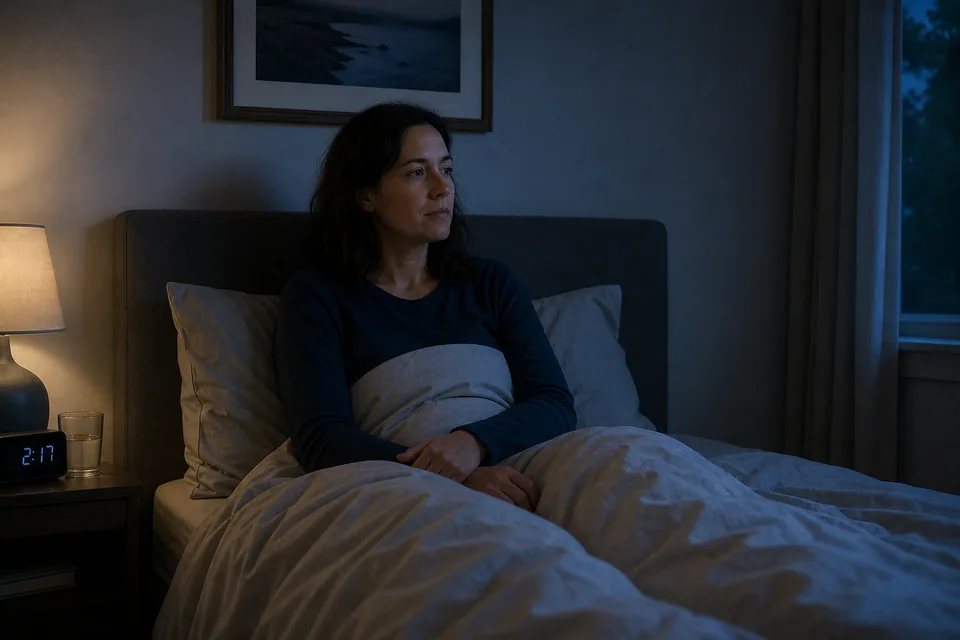
If sleep paralysis happens repeatedly, this is where I’d start.
Not with supplements, gadgets or an elaborate sleep ritual. Start with the basics.
The NHS recommends trying to get around 7 to 9 hours of sleep a day and keeping roughly consistent times for going to bed and getting up.
That doesn’t mean your bedtime needs to be identical to the minute.
Think of regularity as giving your body a reasonably predictable pattern rather than running your evening according to a stopwatch.
It may also be worth looking at anything that is regularly interfering with your sleep. If you’re spending long periods awake once you get into bed, start with our guide to what to do when you can’t fall asleep.
If you’re repeatedly waking during the night, that’s a slightly different problem and our guide to waking up at night is the better place to start.
The aim isn’t to build your entire life around preventing sleep paralysis. It’s to give yourself a reasonably stable opportunity for sleep and see whether the episodes become less frequent.
Is sleeping on your back part of the problem?
Possibly.
The NHS specifically advises trying not to sleep on your back because this can make sleep paralysis more likely.
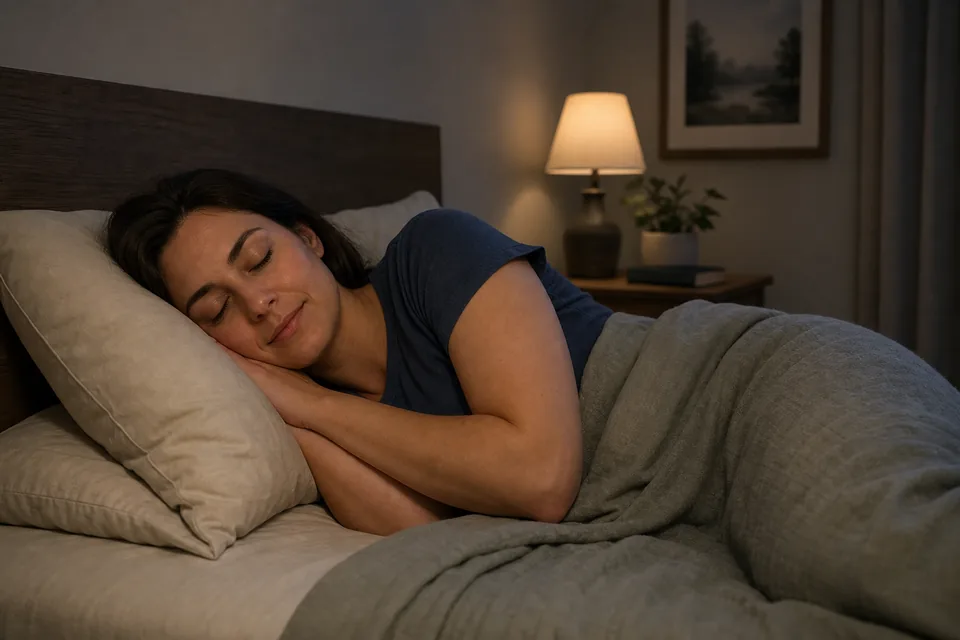
So if you normally sleep flat on your back and episodes are happening repeatedly, trying a different comfortable sleeping position is a reasonable experiment.
Notice the word experiment, though.
You don’t need to panic if you wake up on your back. People naturally change position during sleep, and trying to police your sleeping position throughout the night can become more disruptive than helpful.
Give another position a try and see what happens over time.
Your wider bedroom setup may also matter if heat, noise, light or discomfort is regularly disturbing your sleep. Our bedroom environment guide covers those basics without suggesting that your bedroom has to look like a sleep laboratory.
Is sleep paralysis the same as a nightmare or hypnic jerk?
No, although all three can happen around sleep and can be frightening.
A nightmare is a disturbing dream. You might wake frightened and remember what happened in the dream, but once you’re awake you can normally move.
A hypnic jerk is the sudden twitch or jolt some people experience as they’re drifting into sleep. You might feel as though you’re falling and suddenly jerk awake.
Sleep paralysis is different because the defining experience is being conscious but temporarily unable to move or speak.
That distinction can be useful when you’re trying to describe what happened to a GP.
You don’t need to diagnose yourself from a checklist. Simply describe the sequence: whether you were falling asleep or waking, whether you could move, roughly how long it seemed to last and anything else you experienced.
Does sleep paralysis mean you have narcolepsy?
No.
This is an easy connection to make after searching online because sleep paralysis can occur in people with narcolepsy. But experiencing sleep paralysis does not, by itself, mean you have narcolepsy.
Narcolepsy is a separate neurological sleep condition. One of its main features is excessive daytime sleepiness, and people may experience sudden sleep attacks. Some people with narcolepsy also experience cataplexy, where strong emotions such as laughter can trigger temporary muscle weakness.
So an occasional episode of sleep paralysis without those other symptoms shouldn’t be treated as evidence that you have narcolepsy.
If you’re regularly struggling to stay awake during the day, falling asleep unexpectedly, or experiencing episodes of muscle weakness associated with emotion, those are useful details to tell your GP.
When should you speak to a GP?
An occasional episode that passes quickly may not require medical treatment.
But speak to your GP if sleep paralysis is happening frequently and you’re worried about it, if you’re becoming frightened to go to sleep, or if you’re persistently tired because your sleep is being affected.
It’s also worth seeking advice if there are other symptoms that don’t fit the simple pattern we’ve described.
The useful thing to take to an appointment isn’t a diagnosis you’ve made yourself. It’s a description.
You might note:
- whether the episode happened while falling asleep or waking
- whether you were unable to move or speak
- roughly how long it appeared to last
- whether you saw, heard or felt anything unusual
- how often it has been happening
- whether you’ve also been unusually sleepy during the day
- whether your sleep schedule has changed recently
You don’t need to monitor yourself every night or buy a sleep tracker to collect this information. A few simple notes after an episode are enough.
If poor sleep itself has become persistent, approaches such as CBT-I may be relevant to the wider insomnia problem, although CBT-I isn’t a specific treatment for every episode of sleep paralysis.
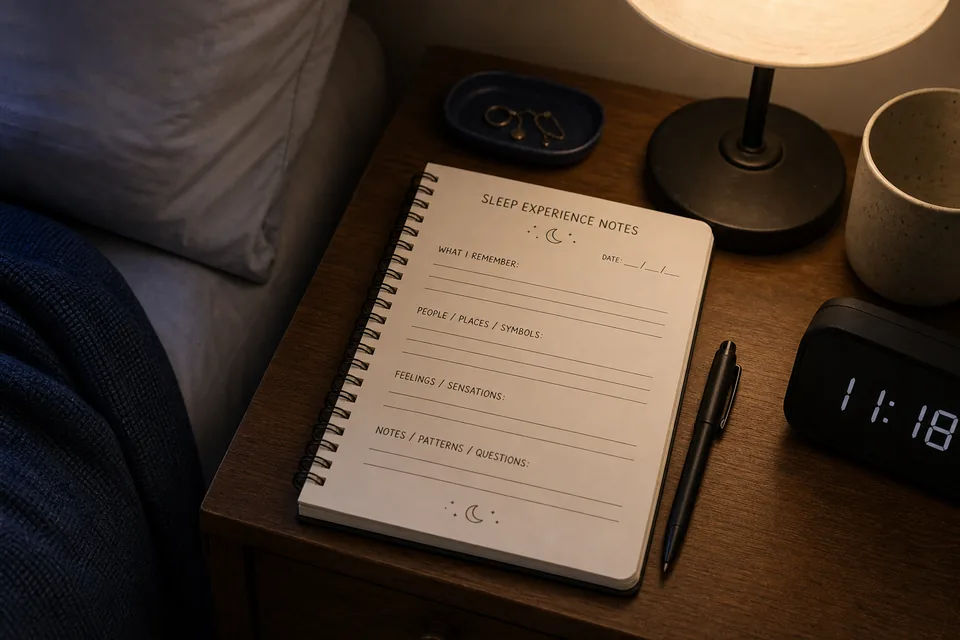
What should you remember tonight?
If you’ve just experienced sleep paralysis for the first time, the most useful thing to know is that the frightening mismatch between being awake and being unable to move has an explanation.
Your body hasn’t stopped working.
For a brief period, awareness has returned while the normal muscle immobility associated with REM sleep is still present. Then the transition completes and movement returns.
You don’t have to spend tonight trying to make sure it never happens again.
If episodes recur, look at the simple things first: whether you’re getting enough opportunity to sleep, whether your sleep schedule has become irregular and whether changing from sleeping on your back seems to help.
And if it’s happening often enough that you’re frightened to sleep, exhausted during the day or simply worried about what’s going on, that’s a perfectly reasonable point to speak to your GP.
Understanding sleep paralysis won’t necessarily make an episode enjoyable. But knowing what it is, why you can’t move and that the episode will pass can make the experience considerably less mysterious.
Put this guide in context
Choose a next step that matches the problem you actually have. Why do I twitch as I’m falling asleep? Hypnic jerks explained offers a closer look at a connected question. If you are unsure where to begin, use the Start Here selector instead of trying several changes at once.
These suggestions are written for adults and need adapting to your health, responsibilities and living arrangements. A short morning note can help you describe a pattern, but keeping records is optional. You do not need to collect perfect evidence before asking for help. If an experiment makes you more uncomfortable or preoccupied, stop and choose a simpler response.
This is general information, not medical advice. Seek individual guidance for symptoms, treatment decisions or medicine questions. Persistent problems and safety concerns deserve attention even if some parts of an evening routine feel helpful.
Sources & references
Clinical context and further reading. Our practical examples are editorial suggestions, not individual treatment protocols.
Source check: 5 September 2026. Evidence label: Practical guidance. Read how we use evidence.