
Sleep problems / Field guide
Sleep Problems in Pregnancy: What May Help and When to Ask for Support
Pregnancy can change sleep in several ways. Here is how to work out what is keeping you awake, what may help, and when to ask for support.

The short answer
Sleeping badly during pregnancy is common, and the reasons can change as your pregnancy progresses. Early on, tiredness, nausea and hormonal changes may affect your sleep. Later, a growing bump, needing the toilet, heartburn, leg discomfort and simply finding a comfortable position can make nights more broken.
A few practical changes can make sleep easier. After 28 weeks, UK guidance advises going to sleep on your side rather than your back. And if poor sleep is becoming difficult to cope with, or something about your symptoms worries you, speak to your midwife, GP or maternity team.
Pregnancy has a slightly unfair relationship with sleep.
At a time when everyone seems to be telling you to “get plenty of rest”, getting that rest can suddenly become much harder.
You may feel exhausted during the day but surprisingly awake when you get into bed. Or perhaps falling asleep isn't the problem at all. Instead, you're waking several times to use the toilet, rearrange your pillows, ease an uncomfortable hip or try to settle heartburn.
Then there is the mental side of it. Pregnancy can give you plenty to think about at exactly the time you'd rather switch off.
If this sounds familiar, it doesn't necessarily mean anything is wrong with your sleep. Pregnancy itself can change both how tired you feel and what happens during the night.
The useful question is not simply, “Why can't I sleep?”
It's: what is disturbing my sleep right now, and is there anything sensible I can do about it?
Why can pregnancy suddenly make sleep so difficult?
There isn't one single reason.
In early pregnancy, you may actually want more sleep than usual. Feeling very tired is common, and nausea or needing to urinate more frequently can make nights less settled too.
As pregnancy progresses, the picture often changes. Your bump gets larger, your usual sleeping position may no longer feel comfortable, and symptoms such as backache, indigestion, heartburn, leg cramps and feeling hot can start interfering with sleep.
By the third trimester, you may find that you are tired but simply can't stay comfortable for very long.
That's an important distinction.
Sometimes what feels like “insomnia” is really fragmented sleep caused by physical discomfort. If you can identify what keeps waking you, the solution may be more practical than trying harder to sleep.

Is it normal to wake up several times during pregnancy?
It can be.
You may wake because you need to change position, because your bump feels uncomfortable, because you're too warm or because you need the toilet again.
If frequent waking is your main problem, our guide to waking up during the night explains why broken sleep can feel so draining even when your total time in bed looks reasonable.
Pregnancy adds another complication: once you're awake, you may start thinking.
Perhaps you're wondering whether the baby is moving normally, thinking about an upcoming appointment, planning what still needs to be bought or simply noticing every sensation in your body.
Before long, a two-minute toilet trip has turned into 40 minutes staring into the darkness.
If that happens, try not to turn the awakening into a test you have to pass. The thought I need to get back to sleep now often makes being awake feel more frustrating.
Keep things quiet and low-key, get comfortable again and give sleep the opportunity to return.
Why do I keep needing the toilet at night?
Frequent urination can start surprisingly early in pregnancy, and later on your growing baby can put more pressure on your bladder.
Unfortunately, the obvious solution of barely drinking anything isn't a good one. You still need adequate fluids during the day.
It may be more useful to look at when you're drinking. If you're having large drinks shortly before bed, shifting more of your fluid intake earlier in the day may reduce some night-time trips without leaving you thirsty.
Caffeine deserves a mention too. Apart from potentially making it harder to settle, caffeinated drinks can add to the problem if you're having them later in the day.
If getting up to urinate has become the main reason your sleep is broken, you can also read our guide to waking up to pee at night.
Pain or burning when you urinate, or blood in your urine, is different from simply needing to go more often. Those symptoms should be discussed promptly with your healthcare team because they can be signs of a urinary infection.
What is the safest sleeping position during pregnancy?
This is one area where there is specific UK guidance.
After 28 weeks of pregnancy, NHS and NICE guidance recommends going to sleep on your side rather than your back. Either the left or right side is fine.
The advice applies when you first go to bed and when you return to sleep after waking during the night.
Now for the part that can save a lot of unnecessary worry: if you wake up and discover that you've rolled onto your back, don't panic.
You haven't failed at sleeping.
Simply turn onto your side again and go back to sleep.
A pillow under your bump, another between your knees, or a pillow supporting your back may make side sleeping more comfortable. You don't need to spend the whole night consciously policing your position.
The aim is to go to sleep on your side, particularly after 28 weeks.
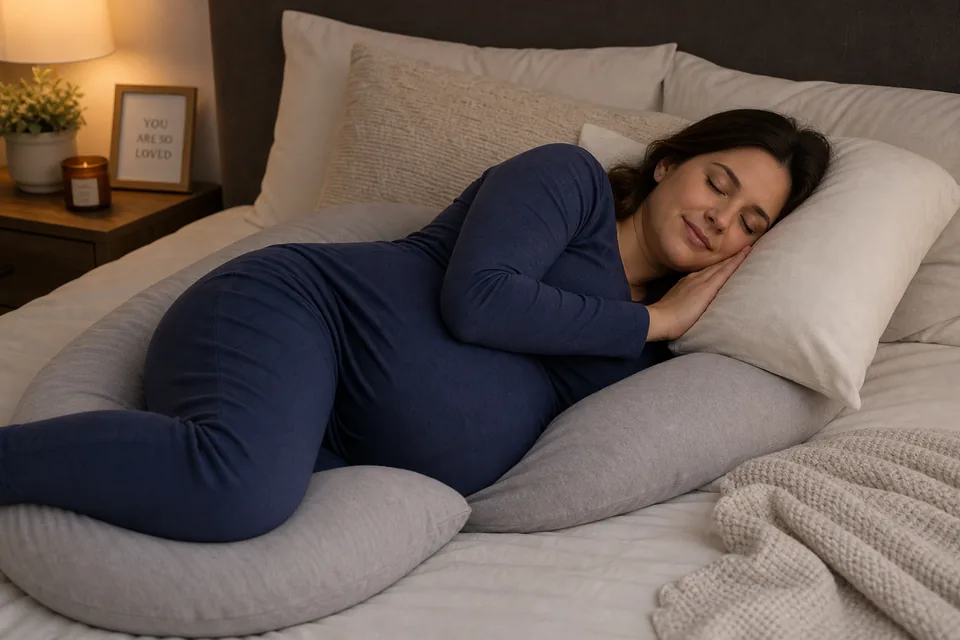
What if I just can't get comfortable?
This is often where a little experimentation beats searching for one “perfect” pregnancy sleeping position.
Try thinking about where you actually feel uncomfortable.
If it's your hips, a pillow between your knees may help your legs sit more naturally.
If your bump feels unsupported, try a pillow underneath or alongside it.
If your back is uncomfortable, additional support behind you may make side sleeping feel less like you're balancing in one position all night.
And don't assume you need an expensive pregnancy pillow. Some people love them, but ordinary pillows arranged where you need support can work perfectly well.
The goal isn't to create an Instagram-worthy nest of cushions.
It's to find a position in which your body stops demanding your attention for long enough for you to sleep.
Could heartburn be the reason you keep waking up?
Heartburn and indigestion are common during pregnancy and can become more noticeable as pregnancy progresses.
They can also be particularly irritating at night because lying down can make reflux symptoms harder to ignore.
If heartburn is disturbing your sleep, the NHS suggests measures including eating smaller meals more often, avoiding eating within three hours of bedtime, sitting upright during and just after meals, and reducing foods or drinks that seem to trigger your symptoms.
Propping your head and shoulders up in bed may also help.
If those changes aren't enough, speak to your midwife, GP or pharmacist. There are treatments for heartburn that can be used during pregnancy, but it's better to check which are suitable rather than choosing something from the medicine cupboard yourself.

What about restless or uncomfortable legs?
Sometimes the problem isn't your bump at all.
You get into bed, your upper body is comfortable, and then your legs seem to have other ideas.
Restless legs can cause an unpleasant urge to move your legs, often becoming more noticeable when you're resting in the evening or trying to sleep.
Pregnancy is one of the situations associated with restless legs syndrome, and iron deficiency can also be linked with it.
That doesn't mean you should diagnose yourself or start taking extra iron on your own.
If the sensation is persistent, strong enough to interfere with sleep or getting worse, mention it to your midwife or GP. They can decide whether anything needs checking and what is appropriate during pregnancy.
Ordinary night-time leg cramps are another possibility. These tend to feel more like a sudden painful tightening of the muscle rather than the restless, difficult-to-describe urge to move associated with restless legs.
What if you're exhausted all day but can't fall asleep at night?
This is one of the most frustrating combinations.
You've spent half the day thinking about bed. Then bedtime arrives and somehow you're awake.
Sometimes daytime sleep is part of the picture. When you're extremely tired, a nap can feel irresistible, but a long or late nap may leave you with less sleep pressure when bedtime arrives.
That doesn't mean you must force yourself to stay awake when you're exhausted. Pregnancy isn't the time for rigid sleep rules.
Instead, notice the pattern.
If you regularly sleep late in the afternoon and then struggle for hours at bedtime, experimenting with an earlier or shorter rest may be worthwhile.
It also helps to give your brain a clear transition into night. Lower the stimulation, allow some quieter time before bed and don't expect yourself to go straight from messages, television, work or planning into sleep within 30 seconds.
If falling asleep has become the main problem, our guide on what to do when you can't fall asleep goes into this in more detail.

Can worry about pregnancy keep you awake?
Of course.
Pregnancy can be exciting and wanted and still give you things to worry about.
You might be thinking about the birth, the baby's health, work, money, becoming a parent, an appointment tomorrow or whether something you felt today was normal.
You can also have unusually vivid dreams or nightmares during pregnancy. The NHS notes that strange dreams about the baby, labour or birth can happen and do not mean the things you dream about are going to happen.
If your brain becomes busiest as soon as the room goes quiet, it can help to give some of those thoughts somewhere else to go.
You might jot down what you're thinking about before bed, make a note of something you want to ask your midwife, or deliberately deal with tomorrow's practical list earlier in the evening rather than taking it to bed with you.
The aim isn't to empty your mind completely. That's a fairly impossible standard.
It's simply to make bedtime less like the first quiet moment you've had all day to think about everything.
Should you take something to help you sleep during pregnancy?
This is an area where it's worth being cautious.
Don't assume that something is safe during pregnancy simply because it is available without a prescription, described as “natural”, or has helped you sleep before.
The NHS advises checking medicines during pregnancy with a pharmacist, midwife or GP. That includes medicines you can buy yourself.
Some products commonly associated with sleep are not routinely recommended during pregnancy, while others may be used in particular circumstances under professional advice.
So if poor sleep has reached the point where you're considering sleeping tablets, sedating antihistamines, supplements or herbal remedies, have that conversation first.
And if you're already taking prescribed medication, don't stop it because you're pregnant without speaking to the healthcare professional responsible for your care.
What can you actually try tonight?
If you've read this far while tired, you probably don't want a complicated 14-step pregnancy sleep programme.
Start with the thing that is actually disturbing your sleep.
If you're uncomfortable, experiment with pillow support.
If heartburn wakes you, look at meal timing and how supported you are when lying down.
If you're repeatedly getting up to urinate, see whether some of your evening fluid intake can sensibly move earlier in the day while keeping yourself well hydrated overall.
If your legs are uncomfortable, notice whether you're dealing with cramp, an urge to move or something else you can describe to your midwife.
If your thoughts become noisy at bedtime, give them a place to land before you get into bed.
And after 28 weeks, remember the simple sleep-position advice: settle to sleep on your side.
You don't have to fix every possible sleep problem at once.
Deal with the one that's actually keeping you awake.

When is poor sleep worth mentioning to your midwife or GP?
You don't have to wait until you're barely functioning before mentioning sleep.
Talk to your midwife, GP or maternity team if poor sleep is persistent, becoming difficult to cope with, or if you are worried about the symptoms causing it.
It's particularly worth asking for advice if you are considering medication or supplements for sleep, have troublesome restless legs, or physical symptoms such as heartburn are not improving with simple measures.
Also pay attention to how you're feeling emotionally during the day.
The NHS advises speaking to a doctor or midwife if sleeplessness comes with symptoms such as feeling hopeless or losing interest in things you would normally enjoy, because sleep difficulty can sometimes occur alongside depression during pregnancy.
And if something feels like a pregnancy or medical problem rather than simply a bad night's sleep, contact your maternity team, GP, NHS 111 or the appropriate urgent service rather than waiting for your sleep to improve.
What should you remember tonight?
Pregnancy can make sleep messier.
You may need more rest while simultaneously finding it harder to get comfortable. You may sleep well for a few nights and then have a week where your bladder, bump, heartburn or thoughts seem determined to take turns waking you.
That doesn't mean you've suddenly forgotten how to sleep.
Try to identify the main thing getting in the way rather than treating the whole night as broken.
Make the practical changes that fit that problem, keep the after-28-weeks side-sleeping advice in mind, and ask your midwife or GP for help when you need it.
Some nights may still be frustrating.
But you don't need a perfect night to give your body useful rest.
Put this guide in context
Choose a next step that matches the problem you actually have. Waking up at night offers a closer look at a connected question. If you are unsure where to begin, use the Start Here selector instead of trying several changes at once.
These suggestions are written for adults and need adapting to your health, responsibilities and living arrangements. A short morning note can help you describe a pattern, but keeping records is optional. You do not need to collect perfect evidence before asking for help. If an experiment makes you more uncomfortable or preoccupied, stop and choose a simpler response.
This is general information, not medical advice. Seek individual guidance for symptoms, treatment decisions or medicine questions. Persistent problems and safety concerns deserve attention even if some parts of an evening routine feel helpful.
Sources & references
Clinical context and further reading. Our practical examples are editorial suggestions, not individual treatment protocols.
- NHS: Tiredness and sleep problems in pregnancy
- NICE NG201: Antenatal care
- NHS: Medicines in pregnancy
- NHS: Indigestion and heartburn in pregnancy
- NHS: Restless legs syndrome
Source check: 5 September 2026. Evidence label: Practical guidance. Read how we use evidence.