
Why Does My Jaw Hurt When I Wake Up?
The Short Answer
If your jaw aches or feels tight when you wake, the most common explanation is that your jaw muscles have been working while you slept. That usually means clenching or grinding your teeth (called sleep bruxism), sometimes alongside a jaw joint problem known as temporomandibular disorder (TMD). Stress, broken sleep, caffeine, alcohol and snoring are all linked to it. It is often mild and eases with simple self-care, but see a dentist if you have jaw pain, worn or sensitive teeth, or a partner who hears you grinding. A few warning signs need urgent attention, and I have set those out near the end.
Waking with an aching jaw usually points to clenching, grinding or a jaw joint problem. Here is how to tell, what helps and when to get it checked.
What Is Going On When Your Jaw Aches in the Morning?

You wake up, have a stretch, and your jaw feels as though it has done a workout without you. Maybe it is stiff. Maybe there is a dull ache around your cheek or ear, or a headache at your temples that fades as the morning goes on. It is a very common complaint, and in many cases it comes down to something you had no idea you were doing.
Sleep bruxism is the medical term for clenching or grinding your teeth while you sleep. A patient leaflet from Leeds Teaching Hospitals estimates that around one in ten people do this in their sleep, and up to one in five clench their teeth while awake. Most people never notice, because it happens when you are asleep and clenching makes no sound at all.
Here is the reassuring part. The same leaflet explains that the brain signals behind sleep bruxism happen in the lighter stages of sleep, so it is not something you are choosing to do, and it is not your fault. It also says sleep bruxism is not necessarily a problem in itself. An international expert consensus published in 2018 took a similar view: in otherwise healthy people, bruxism is better thought of as a behaviour that can raise the risk of certain problems, such as sore muscles or worn teeth, than as a disease in its own right.
So a sore jaw in the morning does not mean something is badly wrong. It does mean the soreness is worth understanding, because that is the part you can actually do something about.
How Can You Tell Whether You Are Clenching or Grinding at Night?
When the thing happens while you are asleep, you have to work from clues. The NHS and the Leeds leaflet point to these:
- a sore or stiff jaw, or tired jaw muscles, when you wake up
- headaches, especially around the temples
- earache with no sign of an ear infection
- ridges along the inside of your cheeks, or tooth-prints along the sides of your tongue
- worn, cracked or broken teeth or fillings
- teeth that feel sensitive
- a partner who has heard you grinding
Silence does not rule it out. Clenching is quiet, so you can have plenty of muscle strain without anyone hearing a thing. A dentist can often spot wear patterns during a routine check, which is one reason the NHS recommends regular dental check-ups if you grind your teeth.
It is also worth noticing how your jaw behaves. Does the ache ease within an hour or two of getting up, or does it build when you chew or yawn? Neither answer is a diagnosis, but it is exactly the sort of detail a dentist will find useful.
Why Might You Be Clenching or Grinding in Your Sleep?
The NHS is candid that it is not always clear why people grind their teeth. What it does say is that grinding is often linked to a handful of things, and several of them will sound familiar.
Stress, anxiety and a busy mind
The NHS describes stress and anxiety as the most common cause of teeth grinding. If you have been carrying a lot lately, whether that is work, money, family or simply too much to think about, your jaw may be holding some of it overnight.
Broken or poor-quality sleep
The Leeds leaflet notes that sleep bruxism can be worse when you are not sleeping well, for instance if you struggle to stay asleep or are woken often by other people or other health conditions. It can become a circle, because a sore jaw can in turn disturb your sleep. The NHS lists disturbed sleep as a symptom of grinding, and says TMD can stop you getting a good night's rest.
Caffeine, alcohol and smoking
Both the NHS and the Leeds leaflet name caffeine, alcohol and smoking as things that can increase the likelihood of grinding. If you want to test your own limit, our guide to how long before bed you should stop caffeine walks through a simple three-day experiment. It is also worth knowing how an evening drink can affect the second half of your night, since fragmented sleep and clenching seem to go hand in hand.
Medicines
The NHS lists medicines taken for sleep problems, depression or anxiety among the possible links. If you think a medicine might be involved, please do not stop taking it on your own. Raise it with your GP, pharmacist or whoever prescribed it, who can look at your options with you.
Reflux and some other health conditions
The Leeds leaflet says people with acid reflux or obstructive sleep apnoea may be more likely to have sleep bruxism, and that some neurological conditions, such as Parkinson's disease, raise the risk too. These are less common explanations, but they are a good reason to mention other symptoms when you see a dentist or GP.
Could Snoring or Sleep Apnoea Be Behind Your Sore Jaw?
The NHS lists snoring and sleep apnoea among the sleep problems linked to teeth grinding, and a link does seem to be real. What is less clear is which way it runs. A 2025 systematic review of the research found that, although an association has been suggested, the cause-and-effect relationship remains unclear, and the evidence is still inconclusive. In other words, the two often turn up together, but researchers have not settled whether one drives the other or whether something else sits behind both.
For you, the practical point is simple. If a sore jaw comes with any of the following, mention it to your GP, because they are worth checking in their own right:
- loud, regular snoring
- pauses in your breathing, gasping or choking noticed by a partner
- waking unrefreshed, even after a full night
- feeling very sleepy during the day
Our guide to snoring or sleep apnoea explains the warning signs, what a GP assessment involves and what a sleep study is like. If you also wake with a dry mouth, why you wake up with a dry mouth is a helpful companion read, as mouth breathing and snoring are part of that story too.
If sleep apnoea is suspected or confirmed, the Leeds leaflet notes that a dentist may suggest a mandibular advancement device, which holds the lower jaw slightly forward. That is a different type of device from a grinding splint and should only follow a proper assessment.
Is It Grinding, a Jaw Joint Problem or Something Else?
Not every morning jaw ache is bruxism. Temporomandibular disorder (TMD) is a problem with the chewing muscles and the joints that link your lower jaw to your skull. According to the NHS, it is not usually serious and generally gets better on its own, but while it lasts it can cause:
- pain around your jaw, ear and temple
- clicking, popping or grating noises when you move your jaw
- a headache around your temples
- difficulty opening your mouth fully
- your jaw locking when you open your mouth
The NHS adds that the pain may be worse when you chew and when you feel stressed.
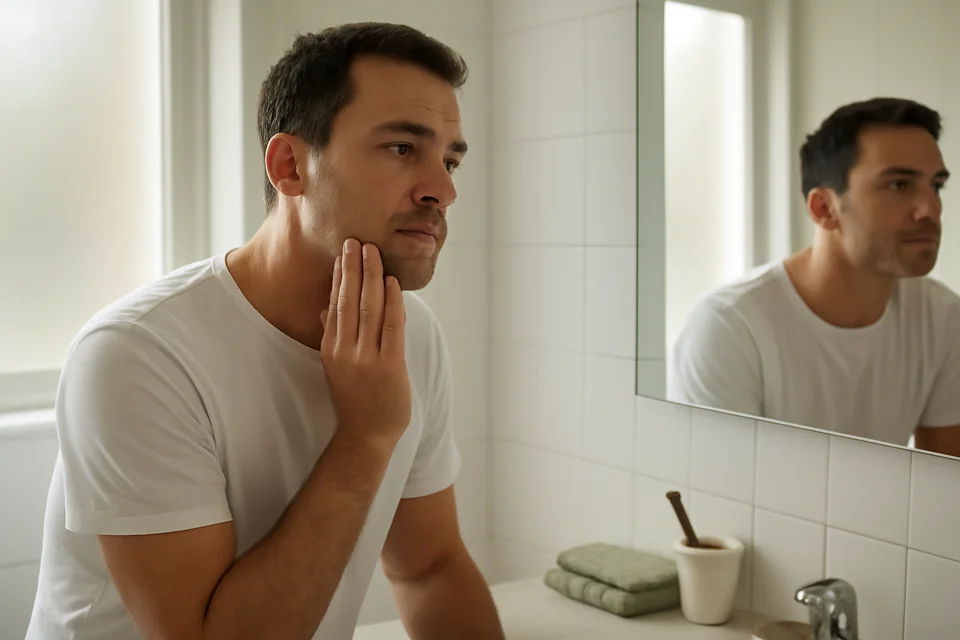
How the two fit together is a point where good sources differ slightly. The NHS lists teeth grinding as a possible cause of TMD. The Leeds leaflet takes a more cautious line: it says bruxism does not cause TMD and does not damage the jaw joints or muscles, but that it can make symptoms worse if you already have TMD. The practical advice is the same either way, which is to look after your jaw and get it checked if the pain persists.
This table is a rough guide to what different clues might suggest. It is not a diagnosis.
| What you notice | What it may point towards | Who to start with |
|---|---|---|
| Stiff, tired jaw muscles on waking, worn teeth, a partner who hears grinding | Sleep bruxism (clenching or grinding) | A dentist |
| Pain around the jaw, ear or temple, clicking or popping, trouble opening wide, jaw locking | Temporomandibular disorder (TMD) | A dentist or GP |
| Toothache, or teeth that are sore, sensitive or loose | A dental problem such as decay or gum disease, which may or may not go alongside grinding | A dentist |
| Jaw pain when chewing with severe headaches, a tender scalp or temples, or vision changes | A condition that needs urgent assessment (see the section on warning signs below) | An urgent GP appointment or NHS 111 |
What Can You Do Today and Tonight to Ease a Sore Jaw?
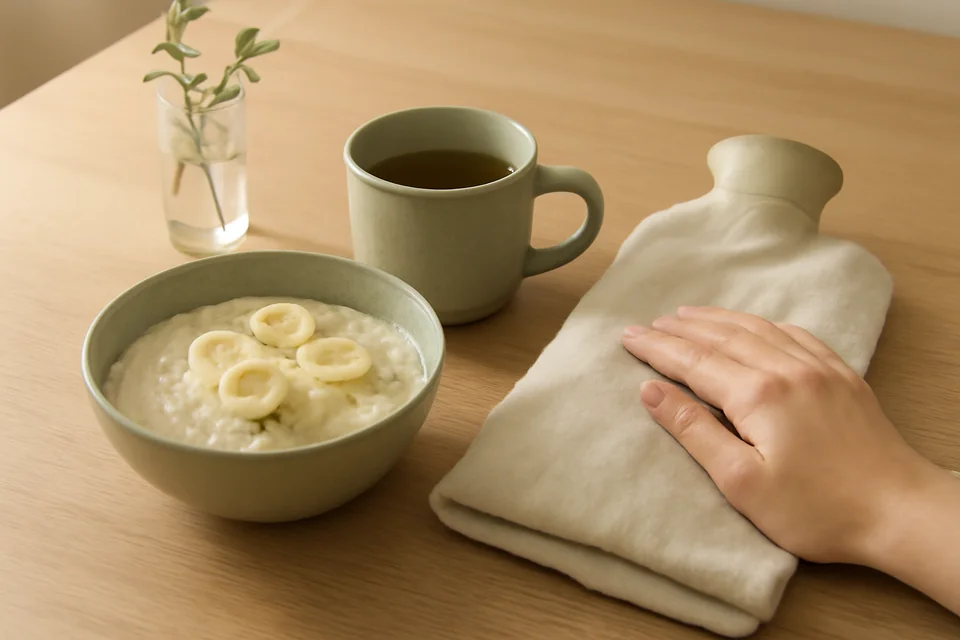
You do not have to wait for an appointment to make your jaw more comfortable. The NHS suggests these for TMD, and many of them suit a jaw that is simply tired from clenching too.
- Eat soft foods such as pasta, omelettes and soup while it is sore.
- Take paracetamol or ibuprofen if they are suitable for you, following the label or your pharmacist's advice.
- Hold an ice pack or a heat pack, wrapped in a tea towel, against your jaw, whichever feels better. The NHS suggests frozen peas for no more than five minutes at a time, or a hot water bottle for 15 to 20 minutes, twice a day. Its teeth grinding page gives a longer time for ice, so keep sessions short if you are unsure and stop if your skin feels uncomfortable.
- Gently massage the sore muscles.
- Find ways to unwind, which I come to next.
The NHS also gives a short list of things to avoid while your jaw is sore: chewing gum or pen tops, biting food with your front teeth, yawning very wide and biting your nails. It also advises against hard foods if you have tooth or jaw pain.
Train yourself out of daytime clenching
Clenching while awake is a separate habit from sleep bruxism, but a jaw that has been tense all day often wakes up sorer. The good news, according to the Leeds leaflet, is that awake clenching is a habit you can retrain with practice. It suggests keeping your neck straight and shoulders relaxed, and keeping your jaw muscles soft with your teeth slightly apart. The NHS TMD advice puts it neatly: apart from when you are eating, your teeth should not be touching.
It takes time, so build in reminders. Leeds suggests asking family or colleagues to tell you when they see your jaw tense, setting a few phone alarms through the day, or putting small stickers where you will see them. Each time you notice, drop your tongue away from the roof of your mouth, let your teeth part and soften your face.
Can Better Sleep and Less Stress Reduce Night-Time Clenching?
Possibly, and it is worth a go, as long as we are realistic about what it can do. The NHS suggests several approaches for people who grind their teeth:
- Relax in ways that work for you, such as breathing exercises, listening to music and regular exercise.
- Go to bed at the same time each night, wind down before bed, and keep your bedroom dark and quiet.
- Avoid smoking and drinking too much alcohol or caffeine.
If you would like somewhere to start, our guide to breathing exercises for sleep covers three gentle techniques, with a clear note about when to stop.
Now the honest bit. The Leeds leaflet says there is no way of stopping the brain signals behind sleep bruxism, and that treatment usually focuses on the problems it causes rather than on stopping it. So the realistic goal is not necessarily to stop clenching altogether. It is calmer nights, a less sore jaw and healthier teeth. If stress is the engine behind it, the NHS says a GP can recommend ways to reduce it, and can help if you want support with smoking or cutting down on alcohol.
Do You Need a Mouthguard, and Will It Stop the Grinding?
Not everyone does. The NHS says treatment for teeth grinding is not always needed, and the Leeds leaflet says you would only need it if bruxism is causing pain or problems with your teeth.
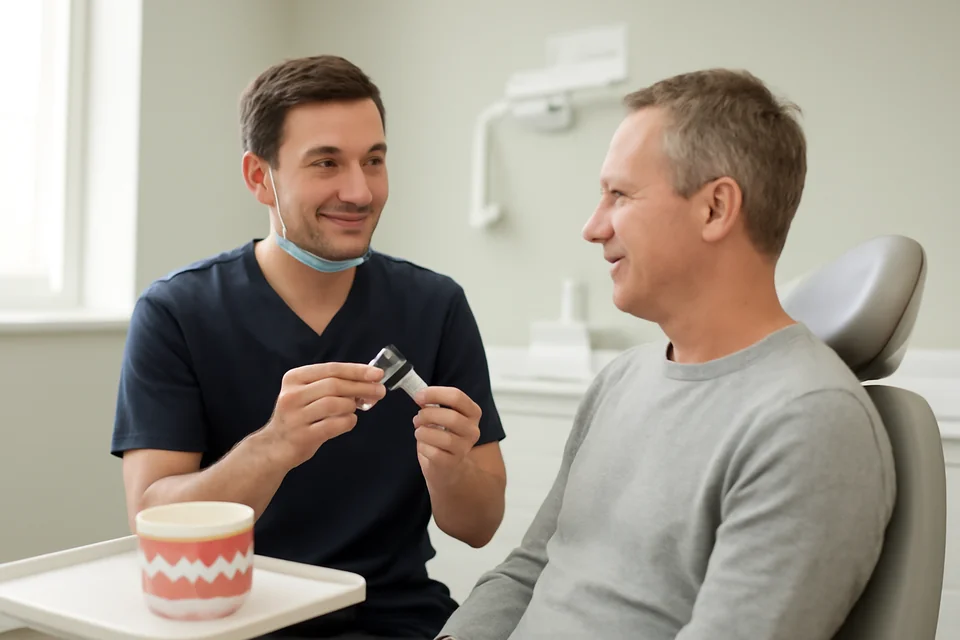
When treatment is worthwhile, the usual option is a splint or mouthguard from a dentist. The NHS explains that these are worn at night, are made to fit precisely over your upper or lower teeth, and protect them from damage. A few points are worth knowing before you start:
- It should come from a dentist. The Leeds leaflet warns that a splint which does not fit properly can cause problems with your teeth or gums, which is a good reason to be wary of one-size-fits-all options from a shop.
- Splints protect, but may not stop. A Cochrane review (published in 2007, so it is not new) found insufficient evidence either to support or to refute splints as a way of reducing sleep bruxism itself. A commentary on the review noted there may be some benefit for tooth wear. A splint is best thought of as a shield for your teeth and, for some people, a help with pain.
- Types differ. Leeds describes soft splints, which some people find make them clench or grind more, and harder stabilisation splints, which last longer. If one type is not working for you, tell your dentist.
- Other options exist but are less common. Botulinum toxin injections can relax the jaw muscles for a short time but are not suitable for everyone, and the Leeds leaflet says medicines are unlikely to be prescribed for bruxism.
Ask your dentist what is available to you on the NHS and privately, and what they would expect the splint to achieve.
When Should You See a Dentist, a GP or Get Urgent Help?
Most morning jaw aches are not an emergency, but some situations deserve prompt attention. Here is how it breaks down.
See a dentist if:
- you grind your teeth and have tooth damage or sensitive teeth
- you have pain in your jaw, face or ear
- your partner says you grind your teeth in your sleep
That is the NHS advice, and a dentist is usually the best first stop for a sore jaw. The NHS also lists difficulty opening your mouth fully or your jaw locking as reasons to seek medical help, so mention those straight away.
See a GP if:
- you would like help with stress, anxiety, smoking or drinking too much, which the NHS says can all feed grinding
- you think a medicine could be involved
- you also have loud snoring, gasping at night or heavy daytime sleepiness
- your jaw pain is not improving or is affecting your sleep or eating, and the dentist has not found a dental cause
Ask for an urgent GP appointment or call NHS 111 if:
- you cannot eat or drink
- you have frequent, severe headaches
- you have pain or tenderness at the side of your head or on your scalp
- you have vision problems, such as double vision or loss of vision in one or both eyes
The NHS lists these among the signs of a problem needing urgent treatment. One condition that can cause this combination is temporal arteritis (also called giant cell arteritis), an inflammation of the arteries around the temples. Jaw pain when you eat or talk is one of its symptoms, and if it is left untreated, the sight problems it causes can become permanent. That is the reason not to ignore this combination of symptoms.
Call 999 if you have chest pain that feels tight or like squeezing, or chest pain that is spreading to your jaw, arms or neck, or if you think you might be having a heart attack. The NHS notes that some people have jaw or back pain without any chest pain, so if jaw pain comes with breathlessness, feeling sick or feeling suddenly unwell, do not wait to see whether it passes.
Keep a One-Week Jaw Diary Before Your Appointment
If you decide to see a dentist or GP, a week of notes will make the conversation much easier. Each morning, jot down:
- how sore your jaw feels, out of ten
- how long it takes to ease
- any headache, earache or tooth sensitivity
- how you slept and whether you woke in the night
- the evening before: caffeine, alcohol, how stressful the day was and how late you ate
If you have a partner or housemate, ask whether they have heard grinding. You can also check each morning for tooth-prints on the sides of your tongue. The free sleep diary on Rested Review is a simple place to keep track of your sleep alongside this.
A week of notes will not prove what is causing your jaw pain, because plenty of things change from day to day. If keeping score makes you more anxious about sleep, stop and rely on how you feel instead. The aim is a few useful details, not another thing to worry about.
What to Remember About a Sore Jaw in the Morning
A jaw that aches when you wake is most often your jaw muscles telling you they have been busy overnight. It is common, it is often linked to stress and broken sleep, and it is frequently mild. Gentle self-care, a calmer evening and a few daytime habit changes can make a real difference, and a dentist can protect your teeth if grinding is causing damage.
Do not put up with pain that lingers, teeth that are wearing down or a jaw that locks. And do not ignore the rarer warning signs: severe headaches, a tender scalp or temples, vision changes, or jaw pain with chest symptoms. Most of the time the answer is much more ordinary, and it is much easier to deal with once you know what you are dealing with.
Sources and References
- NHS: Teeth grinding (bruxism)
- NHS: Temporomandibular disorder (TMD)
- NHS: Heart attack
- Leeds Teaching Hospitals NHS Trust: Clenching and grinding your teeth (bruxism), patient information leaflet, 2026
- NI Direct (adapted from NHS content): Giant cell arteritis (temporal arteritis)
- Lobbezoo F, et al. International consensus on the assessment of bruxism: report of a work in progress. Journal of Oral Rehabilitation, 2018
- Relationship between bruxism and obstructive sleep apnea: a systematic review of the literature. Journal of Clinical Medicine, 2025
- Macedo CR, et al. Occlusal splints for treating sleep bruxism (tooth grinding). Cochrane Database of Systematic Reviews, 2007
- Jagger R. The effectiveness of occlusal splints for sleep bruxism. Evidence-Based Dentistry, 2008